
How Custom Web Development Can Improve Your Business Growth

In today’s competitive digital landscape, having a website that stands out and provides an exceptional user experience is more critical than ever. With businesses shifting to online platforms, investing in custom web development can be a game-changer. Custom-built websites offer a tailored approach, unlike off-the-shelf solutions, enabling businesses to achieve greater flexibility, scalability, and overall success. In this blog, we’ll explore how custom web development can improve your business growth and why it’s an essential investment for your brand. What is Custom Web Development? Custom web development involves creating a website specifically designed to meet the unique needs and goals of a business. It includes developing custom features, functionalities, and a user interface that aligns with your brand identity and business objectives. Unlike using pre-built templates or standard website builders, custom development ensures that your website is highly flexible, adaptable, and optimized for the best user experience. The Benefits of Custom Web Development for Your Business 1. Tailored to Your Business Needs A custom-built website is designed with your specific goals in mind. Whether you run an e-commerce business, a service-based company, or a content-heavy website, custom development allows you to integrate the exact features and functionalities that align with your business model. It offers greater flexibility compared to ready-made solutions, which might not meet your specific requirements. 2. Enhanced User Experience (UX) User experience (UX) is at the core of web development. A well-designed custom website provides a seamless, intuitive, and engaging experience for your visitors. Through responsive design, fast loading times, and easy navigation, custom development helps enhance UX, ensuring that visitors stay longer, engage more, and are more likely to convert into customers. 3. SEO-Friendly Design Custom web development allows you to optimize your site from the ground up, which is crucial for SEO. From the code structure to the content management system (CMS), everything can be optimized to make your site more search-engine-friendly. You have control over key factors like keyword integration, metadata, and page loading speeds—all critical for improving search rankings. 4. Scalability and Flexibility As your business grows, your website must be able to keep up with increasing demands. Custom development provides the scalability and flexibility needed to adjust and expand your website over time. Whether adding new features, integrating third-party software, or upgrading the design, a custom-built website can grow alongside your business. 5. Security Features Custom websites are more secure than off-the-shelf templates because they are built with security in mind from the start. Developers can integrate advanced security measures such as SSL certificates, secure coding practices, and robust authentication systems to ensure your website is protected from cyber threats and data breaches. 6. Faster Load Times Website speed is a critical factor in user satisfaction and SEO ranking. Custom development allows developers to optimize code, images, and scripts to improve load times, providing a faster browsing experience for your visitors. This can lead to a higher conversion rate, reduced bounce rate, and improved overall user satisfaction. 7. Better Branding and Visual Appeal With custom development, your website can reflect your brand’s unique identity. From the color scheme and typography to the overall design and layout, custom websites are personalized to align with your branding. This helps create a memorable and professional impression for your visitors. 8. Cost-Effectiveness in the Long Run While custom development can have a higher initial cost, it is a long-term investment. Over time, a custom-built website will save you money by reducing maintenance costs, avoiding the limitations of template-based sites, and offering a better ROI. With the ability to scale and adapt, your custom website will meet the evolving needs of your business without requiring constant overhauls or expensive upgrades. Key Features to Consider in Custom Web Development When investing in custom web development, it’s essential to consider specific features that can benefit your business. These features include: 1. Content Management System (CMS) A powerful CMS allows you to manage, update, and optimize content on your website with ease. Popular CMS options like WordPress, Joomla, or Drupal offer flexibility and scalability, allowing you to make changes without needing technical expertise. 2. E-Commerce Integration For businesses looking to sell products online, e-commerce integration is essential. Custom development allows for seamless integration with various e-commerce platforms, payment gateways, and inventory management systems, making the shopping experience smoother for your customers. 3. Mobile Optimization With mobile traffic increasing daily, having a mobile-friendly website is no longer optional. Custom development ensures that your website is optimized for mobile devices, offering responsive design and fast loading speeds on smartphones and tablets. 4. Custom Features and Integrations Custom websites allow you to build specific features that set your business apart. Whether it’s a custom booking system, a membership portal, or an advanced search functionality, custom development gives you the flexibility to add features that meet your specific needs. 5. Analytics and Tracking Integrating analytics tools into your custom website allows you to track visitor behavior, understand customer preferences, and make data-driven decisions. With tools like Google Analytics or custom reporting systems, you can measure the effectiveness of your marketing campaigns and website performance. How Custom Web Development Drives Business Growth 1. Improved Lead Generation and Conversions A custom-built website is designed to effectively convert visitors into leads or customers. By integrating lead capture forms, compelling CTAs (Calls to Action), and personalized content, you can boost lead generation and drive conversions. 2. Better Customer Engagement A well-designed custom website fosters better customer engagement through interactive features like blogs, chatbots, customer feedback forms, and personalized offers. Engaged customers are more likely to return and make repeat purchases. 3. Competitive Advantage Custom development gives your business a competitive edge by offering unique features and functionalities that competitors might lack. By providing an excellent user experience and leveraging the latest technologies, you can differentiate your business in a crowded marketplace. 4. Data-Driven Insights With custom development, you can integrate advanced data analytics and tracking systems that help you monitor and optimize your marketing strategies. Understanding customer
Utilizing Webinars and Demos as Lead Generation Tools for Your New Software

When launching a new software product, generating qualified leads can be one of the most challenging aspects of your marketing strategy. However, you may perfectly attract, engage & convert prospects with the right tools and tactics. One of the most powerful strategies to generate leads for newly developed software is through Webinars and Demos as Lead Generation Tools. These two tools offer a unique and interactive approach to lead generation. Webinars provide an opportunity to educate many prospects, while demos allow for more personalized one-on-one engagement. Together, they can help you build relationships with potential customers, showcase the value of your software, and ultimately drive conversions. Let’s find out how to use webinars & demos as lead generation tools for your new software. The Power of Webinars in Lead Generation Webinars are to capture attention, arrange valuable content, & engage with your possible customers. Unlike traditional marketing methods, webinars allow direct interaction with your audience, making them an excellent platform for educating and nurturing leads. Why Webinars Work for Software Lead Generation Best Practices for Hosting Successful Webinars Leveraging Product Demos for Lead Generation Product demos offer a more personalized way to connect with leads. Unlike webinars, which can reach a broader audience, demos are typically one-on-one sessions that provide a tailored experience based on the prospect’s unique needs. They allow you to dive deeper into how your software can address specific pain points, increasing the likelihood of conversion. Why Product Demos Matter for Software Lead Generation Tips for Conducting an Effective Product Demo Combining Webinars and Demos for Maximum Lead Generation Impact While webinars and product demos are powerful lead generation tools, combining them can be even more effective. Here’s how: Conclusion Webinars & product demos are the two major lead generation strategies for any software. By leveraging these tools, you can engage with prospects meaningfully, showcase your software’s value, and ultimately drive conversions. Whether hosting a large-scale webinar or conducting a personalized demo, these strategies will help you build trust, establish credibility, and turn leads into loyal customers. At Speed Dot 360, we understand the importance of engaging with your audience in real-time. If you want to enhance your software’s lead generation strategy, we can help you implement successful webinar and demo strategies tailored to your unique needs. Start using webinars and demos to boost your lead generation efforts today and see the difference they can make for your business. FAQs 1. Why are webinars an effective lead generation tool? Answer: Webinars provide real-time interaction with prospects, allowing you to showcase your software’s value, answer questions, and build trust. They connect directly with your audience, making converting them into qualified leads easier. 2. How do product demos help generate software leads? Answer: Product demos offer a personalized experience, allowing you to address specific pain points and showcase the software’s benefits in real-time. They help build trust, engage prospects, and increase the likelihood of conversion. 3. How long should a webinar or demo last? Answer: Webinars should typically last between 30 and 60 minutes, while product demos should be around 15 to 30 minutes, depending on the complexity of the software. 4. What’s the best way to promote my webinar or demo? Answer: Promote your webinar or demo through email marketing, social media, paid ads, and your website. Ensure to highlight the key benefits of attending and create a sense of urgency with limited spots or exclusive content. 5. Should I offer a free trial after a demo or webinar? Answer: Yes, offering a free trial after a demo or webinar is an excellent way for leads to experience your software firsthand. It provides them with a risk-free way to explore your product and increases the chances of conversion.
Sustainable DevOps: Green Software Practices for a Cleaner Digital Future

In today’s highly tech-savvy online landscape, companies deliver software quicker than ever. The rise of DevOps—a methodology combining software development (Dev) and IT operations (Ops)—has revolutionized how businesses launch, manage, and scale digital products. However, this speed and efficiency come at a hidden cost: energy consumption, carbon emissions, and increased environmental impact. As the world shifts toward sustainability, Sustainable DevOps or Green Software Practices has emerged as a powerful solution for organizations aiming to minimize their carbon footprint while maintaining high performance. At SpeedDot360, we understand that embracing sustainability in DevOps isn’t just about reducing energy consumption—it’s about building a responsible digital future. This blog explores sustainable DevOps, outlines practical green software practices, and highlights how SpeedDot360 can help businesses adopt eco-conscious digital solutions without compromising innovation or efficiency. The Environmental Impact of Traditional Software Development The digital world often feels invisible—you can’t touch software. Yet behind every application, website, or e-commerce platform lies an enormous digital infrastructure consuming significant energy. Traditional DevOps focuses primarily on speed and automation. But today, businesses cannot ignore the environmental implications. That’s where Sustainable DevOps comes into play—aligning technological growth with ecological responsibility. What is Sustainable DevOps? Sustainable DevOps integrates green computing principles into every stage of the DevOps lifecycle—from planning and coding to testing, deployment, and monitoring. It focuses on three key goals: Unlike traditional DevOps, which mainly emphasizes speed and scalability, Sustainable DevOps adds a layer of environmental consciousness without compromising performance. It’s about achieving balance—delivering quality software while keeping sustainability at the core. At SpeedDot360, the future belongs to companies that combine innovation with responsibility. Our development team integrates green software practices into every project, helping businesses meet sustainability goals while staying competitive. Core Green Software Practices in Sustainable DevOps Adopting Sustainable DevOps requires more than just intent—it demands a practical framework and modern tools. Below are key green software practices businesses can implement with SpeedDot360’s expertise: 1. Cloud Optimization & Serverless Computing Shifting workloads to serverless architectures ensures that computing power is used only when needed. Instead of keeping servers running constantly, serverless platforms scale automatically, reducing idle energy consumption. At SpeedDot360, we help businesses migrate to cloud-native and serverless ecosystems, ensuring maximum efficiency with minimal energy waste. 2. Code Efficiency & Lightweight Frameworks Poorly optimized code consumes more CPU power, leading to higher energy usage. Writing clean, efficient, and reusable code ensures applications run smoothly with lower processing needs. Our development team at SpeedDot360 uses modern frameworks and coding best practices to build lightweight yet powerful applications, improving both performance and sustainability. 3. CI/CD Pipelines with Energy Monitoring Tools Continuous Integration and Continuous Deployment (CI/CD) pipelines often involve multiple build, test, and deploy cycles. By integrating energy monitoring tools into these pipelines, companies can measure and optimize energy consumption at every stage. SpeedDot360 incorporates tools that provide real-time insights into energy usage, allowing businesses to make data-driven sustainability decisions. 4. Automated Scaling & Resource Scheduling Many applications run at full capacity even during low-traffic periods, wasting energy. With auto-scaling and resource scheduling, workloads can be distributed based on demand, reducing unnecessary energy consumption. SpeedDot360 enables smart resource allocation, ensuring systems operate efficiently around the clock. 5. Infrastructure-as-Code (IaC) with Green Principles Using IaC tools like Terraform or Ansible, infrastructure can be designed for optimal energy efficiency. SpeedDot360 helps businesses adopt IaC practices with a sustainability-first mindset, creating leaner infrastructure deployments. Tools and Technologies for Sustainable DevOps Implementing green DevOps requires the right technologies. Some popular tools include: SpeedDot360 ensures clients use the best combination of tools tailored to their sustainability goals and technical requirements. Business Benefits of Going Green with DevOps Adapting to Sustainable DevOps practices is not just perfect for the environment—it ensures measurable business benefits: By partnering with SpeedDot360, businesses achieve green IT practices and gain a competitive edge in the digital marketplace. How SpeedDot360 Leads in Sustainable DevOps At SpeedDot360, we deliver cutting-edge digital solutions while staying committed to sustainability. Our expertise spans: Every solution we deliver is built on principles of efficiency, scalability, and responsibility. Whether you want to optimize cloud usage, automate workflows, or reduce operational costs, SpeedDot360 ensures technology works for your business—and the planet. Future Trends in Sustainable DevOps The future of Sustainable DevOps will witness: SpeedDot360 stays ahead of trends, helping businesses confidently embrace next-gen sustainable technologies. Conclusion: Build a Cleaner Digital Future with SpeedDot360 Sustainable DevOps isn’t just a trend—it’s necessary for businesses aiming to thrive in a world demanding environmental responsibility. Companies can minimize their carbon footprint, cut costs, and build a positive brand image by adopting green software practices. At SpeedDot360, we merge innovation with sustainability, offering businesses the tools, expertise, and strategies to create eco-conscious digital solutions without sacrificing performance or profitability. Ready to go green with your DevOps strategy? Contact SpeedDot360 today and take the first step toward a cleaner, brighter, more sustainable digital future. FAQs on Sustainable DevOps 1. What is Sustainable DevOps?Sustainable DevOps combines DevOps practices with green computing principles to minimize energy usage and carbon emissions. 2. How does green software reduce costs?Efficient resource utilization lowers energy bills, cloud costs, and operational expenses. 3. Can existing systems be optimized for sustainability?Yes, SpeedDot360 helps modernize legacy systems with eco-friendly solutions. 4. What tools support Sustainable DevOps?Tools like Kubernetes, Terraform, and Prometheus enable energy-efficient workflows.5. Why choose SpeedDot360 for green DevOps?Because we deliver performance-driven, eco-conscious solutions tailored to your business needs.
Generative Engine Optimization (GEO): Ensuring Your Brand is Cited by AI

As generative AI tools become mainstream, businesses face a new challenge: ensuring their brand appears when AI systems like ChatGPT, Google Gemini, and other large language models (LLMs) generate content. The old rules of search engine optimization (SEO) are no longer enough because search engines are no longer the only way people get information. Today, Generative Engine Optimization (GEO) is emerging as the next big thing in digital marketing, helping brands secure visibility in AI-generated summaries, answers, and content recommendations. This guide explores everything businesses need to know about GEO—what it is, why it matters, and the practical steps you can take to ensure your brand is cited when AI delivers results to users worldwide. What is Generative Engine Optimization (GEO)? Generative Engine Optimization, or GEO, refers to optimizing content so that generative AI systems recognize, trust, and reference it when producing answers or creating content. Unlike typical SEO, which targets the ranking in search results, GEO plans to build topical authority, AI-centric signals and structured content, allowing AI modes to: In simple terms, while SEO gets you visibility on Google or Bing, GEO helps your brand stay visible in the AI-powered digital future. Why GEO Matters in 2025 and Beyond The digital landscape is evolving fast. Millions of people now rely on AI-powered assistants for product recommendations, research, and answers to everyday questions. That means: Ignoring GEO today might be the same as neglecting SEO in the early 2000s—a missed opportunity that competitors will capitalize on. Key Strategies for Effective Generative Engine Optimization To make GEO successful, you need to adapt strategies designed for AI-powered methods rather than just search engines. Let’s go through the following significant steps: 1. Use llms.txt to Guide AI Models Just as sites use robots.txt to guide search engines, LLMs.txt files are made to communicate with the large language models (LLMs). By generating this file, you can: Adding an llms.txt file ensures AI tools understand your brand’s content structure and citation policies. 2. Implement AI-Friendly Metadata Metadata is information embedded in your content that helps search engines and AI models understand context. For GEO, you need to: This makes it easier for AI tools to recognize your content as authoritative and reliable. 3. Structured Data and Schema Markup Generative AI systems prefer structured, organized information. Schema markup guides AI about the specific meaning of your content, not just what it reveals. For instance: The more context you ensure, the easier it is for AI to reference your brand perfectly. 4. Build Clear Topical Authority AI tools rely on credible sources when it is to create answers. To become one: When AI sees your brand as a trusted expert in a particular subject area, it is likelier to cite you in responses. 5. Create AI-Friendly Content Formats Generative AI prefers concise, well-structured information. That means: The easier it is for AI to read your content, the more likely it will appear in AI-generated answers. 6. Monitor AI Citations and Mentions GEO doesn’t end with publishing content—you need to track when and how AI tools reference your brand. This data helps you fine-tune your content strategy. Future Trends in Generative Engine Optimization The field of GEO is still new, but here’s what we can expect in the coming years: How Businesses Can Get Started with GEO If you’re new to Generative Engine Optimization, here’s a roadmap: Conclusion Generative Engine Optimization isn’t just a passing trend—it’s the future of digital visibility. As AI tools increasingly shape how users find information, businesses that optimize for AI citations and discoverability will have a significant competitive advantage. By implementing llms.txt, using structured data, building topical authority, and publishing AI-friendly content, your brand can stay ahead in the evolving digital era. FAQs 1. How is GEO different from traditional SEO?GEO optimizes content for AI-generated results, while SEO is all about improving a ranking in search results on all the search engines. 2. Do all businesses need to adopt GEO strategies?Yes, especially brands that rely on digital visibility for leads, sales, or thought leadership should start investing in GEO. 3. What is llms.txt, and why is it important?llms.txt is a file that communicates with AI models, telling them how to access and cite your content. 4. How soon will GEO become mainstream?With the rapid adoption of AI tools in 2025, GEO is expected to become a core part of digital marketing within the next 1–2 years.5. Can GEO improve website traffic directly?Indirectly, yes. If AI tools consistently mention your brand, users will search for you directly or visit your site after seeing your brand cited as an authority.
Google Introduces Ads in AI Overviews: What It Means For Marketers

Google has once again disrupted the digital marketing landscape—this time by launching ads in AI Overviews. As artificial intelligence transforms search behavior, Google is evolving its monetization strategy to match user expectations and trends. The introduction of ads directly within AI-generated overviews signals a significant shift in how businesses must approach paid visibility online. For brands that rely on PPC advertising management, the implications are both promising and complex. Marketers must prepare for a future where AI-assisted search doesn’t just recommend content—it sells it. What Are Google’s AI Overviews? Google’s AI Overviews are summaries generated using large language models (LLMs) like Gemini (formerly Bard) that appear at the top of certain search results. They aim to deliver instant answers by synthesizing information from multiple sources—essentially preempting the need to click on traditional links. Now, Google has begun inserting Search and Shopping ads directly into these AI Overviews, initially for U.S. users and soon expanding to other English-speaking countries. Previously limited to mobile search, these ad placements are now being extended to desktop users and even into “AI Mode,” a new search interface optimized for conversational interaction. What Does This Mean for Marketers? This move adds a new, prominent layer of ad real estate in search. It also means your brand’s visibility within search results now competes not only with SEO-optimized content but with AI-curated content that can include paid placements within the overview itself. For businesses already investing in SEO optimization services and paid social media advertising, the game has changed. The traditional hierarchy of organic listings → paid ads, → featured snippets is evolving into a dynamic and AI-driven interface where contextual relevance and intent drive visibility. Who’s Eligible for These New Ad Placements? Google’s initial rollout supports advertisers using: That means if you’re using Google Ads with these campaign types, your ads may already be eligible to appear in AI Overviews—without requiring any additional setup. However, to fully capitalize on this visibility, your ad content, keywords, and creative approach must adapt to AI’s evolving context requirements. How Are These Ads Displayed? In a traditional search, ads are usually placed above or below organic results. In AI Overviews, ads are embedded within the actual answer—appearing alongside links and sources provided by the AI. Importantly, these ads are: This contextual approach may lead to higher engagement, as ads blend naturally into informative answers. Opportunities and Challenges Ahead ✔ Opportunity: Enhanced Visibility Where Users Are Focused AI Overviews are designed to capture immediate attention. By inserting ads directly into that space, Google is giving advertisers access to one of the most concentrated areas of user focus. For marketers with strong brand strategy consulting, this offers a unique way to ensure your messaging appears in the “zero-click” zone—before users even scroll. ✔ Opportunity: Relevance-Driven Conversions Unlike traditional ads that depend on visual dominance, AI Overview ads benefit from being contextually embedded within helpful content. This means higher engagement potential—especially for product-based or solution-driven queries. If a user searches, “What’s the best air purifier for allergies?” and the AI suggests your product, that placement can be reinforced with a targeted ad—driving conversions from an already-warm lead. ⚠ Challenge: Ad Saturation and User Fatigue With the increasing number of ad placements across the SERP—now including inside AI answers—users may begin to experience ad fatigue. This could lead to: Balancing precision targeting with value-driven messaging will be essential to maintaining engagement. Preparing for AI-Enhanced Advertising As a marketer, how can you adjust your strategy for success in this AI-powered ad environment? 1. Audit Your Existing Campaigns Start by reviewing your use of: Are they optimized for intent and performance? If not, this is a good time to conduct a comprehensive audit in collaboration with your PPC advertising management team. 2. Optimize for Conversational Relevance AI Overviews are generated to feel natural and conversational. Your ad copy should match this tone. Try: “Looking for allergy relief? Discover HEPA air purifiers starting at $99.” Avoid: “HEPA AIR PURIFIER – BUY NOW – 50% OFF!” The goal is to enhance, not disrupt, the user’s experience. 3. Monitor Your Campaign Metrics Track: These metrics can indicate whether your ads are resonating in AI Overviews versus traditional placements. Beyond Ads: A New Era of Search Behavior Google’s AI ad rollout also reflects a broader shift in how people search. Increasingly, users expect: To meet these expectations, your marketing strategy should combine: In short, it’s not just about ranking anymore—it’s about being the best answer in the right format, at the right time, powered by AI. Final Thoughts: A Call for Agility Google’s decision to introduce ads in AI Overviews is not a minor adjustment—it’s a redefinition of the search experience. For marketers, it’s a wake-up call to embrace agility, innovation, and AI fluency. At Speed Dot 360, we understand how fast this landscape moves. That’s why we provide integrated strategies that combine PPC advertising management, AI-readiness, SEO optimization, and brand strategy consulting to help businesses not only adapt—but lead. Whether you’re looking to dominate in AI search, revamp your ads for conversational platforms, or future-proof your paid media, we’re ready to help you rise to the occasion.
Gen AI’s 165x Faster Growth Over Organic Signals a Shift in Search.

In the constantly evolving digital marketing ecosystem, few shifts have been as rapid—and as dramatic—as the meteoric rise of generative AI in online search behavior. According to recent industry analysis, Gen AI traffic is growing 165 times faster than organic search, signaling not just an emerging trend but a seismic shift in how users discover, evaluate, and interact with content. This isn’t a story about the demise of traditional SEO, far from it. Instead, it underscores the urgency of adopting an adaptive, holistic strategy that blends traditional methods with artificial intelligence solutions to stay ahead of the curve. At Speed Dot 360, we’ve always believed in staying one step ahead—and this new wave of AI-driven search discovery proves why that mindset is more crucial than ever. Gen AI’s Meteoric Growth: A 165x Surge The WebFX study tracking over 1 billion search sessions across 1,500 businesses revealed a stunning insight: generative AI is growing 165x faster than organic search. While AI-driven search still represents a smaller percentage of overall traffic (currently less than 1%), its trajectory suggests it’s on course to become a major discovery channel in the near future. What’s fueling this acceleration? For businesses, this shift means it’s no longer enough to dominate Google’s SERPs—you now need to show up across multiple digital touchpoints, many of which are powered by AI. AI vs. Organic: Quantity vs. Quality? While organic search continues to deliver the lion’s share of web traffic (31.09%), Gen AI is punching above its weight in terms of user engagement and conversion rate. That means businesses targeting these users with the right content can yield disproportionately higher returns—especially when AI is leveraged as part of a comprehensive artificial intelligence solution. Search Is No Longer Just “Search”: The Rise of AI Ecosystems Another revelation from the data is the diversification of platforms contributing to AI search traffic. Here’s a quick look at the top players: Platform Share of Gen AI Sessions ChatGPT 60.6% Perplexity 26.2% Google Gemini 9.8% Microsoft Copilot 3.4% Takeaway: It’s not just about optimizing for Google anymore. Brands must now assess where their audience engages—whether in conversational queries on ChatGPT, research-driven answers from Perplexity, or integrated browsing experiences in Gemini—and tailor their content strategies accordingly. Which Industries Are Leading in Gen AI Adoption? Some sectors are already leveraging Gen AI’s growth, with retail, healthcare, hospitality, and ecommerce leading in AI-driven traffic acceleration: Industry Month-Over-Month Growth in Gen AI Sessions Retail Storefronts 47.11% Leisure & Hospitality 32.52% Healthcare 30.60% Ecommerce 30.28% Construction 29.19% These sectors are characterized by consumer trust, price comparison, and rapid information access—all of which Gen AI tools excel at facilitating. If your business operates in one of these industries, your AI strategy needs to be more than an afterthought—it should be central to your digital roadmap. OmniSEO™: A Framework for the New Search Era To compete effectively in today’s multifaceted landscape, WebFX recommends an OmniSEO™ approach: a multi-channel, AI-inclusive strategy that ensures your brand shows up everywhere your audience searches. What does OmniSEO™ involve? By embracing an OmniSEO™ strategy, businesses can maximize both volume and quality—drawing high-converting AI traffic without sacrificing traditional search authority. How to Optimize for Gen AI Discovery So, how do you make sure your brand is discoverable in this fast-changing environment? 1. Test Your Brand in AI Platforms Type customer-centric questions into ChatGPT, Gemini, or Perplexity. Does your brand show up? If not, look at who does—and reverse-engineer their content. 2. Close AI Content Gaps Study the answers AI tools give about your industry or niche. If they lean on general blogs or outdated info, there’s an opportunity to create focused, factual, AI-optimized content. 3. Optimize with Schema Markup Use structured data (like FAQs, How-To, and Product) to help AI tools better understand and extract your content. 4. Build Content That Helps AI engines prioritize action-focused tools like: These elements not only serve human readers but also increase your visibility in AI-generated results. 5. Track, Adjust, Repeat Keep tabs on referral data, time-on-page, and search appearance. AI is evolving, and so must your approach. The Strategic Role of Artificial Intelligence Solutions At Speed Dot 360, we’ve seen firsthand how artificial intelligence solutions can empower brands to: Whether it’s through AI-powered keyword clustering, predictive analytics, or conversational AI integrations, these tools give you the agility to adapt as fast as the search landscape changes. Final Thoughts: The Future Is Omni, Not Either-Or Generative AI’s 165x faster growth is not a threat to organic search—it’s an evolution of how people ask, engage, and decide. Yes, traditional search remains powerful. But ignoring Gen AI’s momentum is a mistake businesses can’t afford to make. It’s no longer about whether to optimize for AI or SEO. It’s about doing both, strategically and simultaneously. Embracing artificial intelligence solutions is the only way to remain discoverable, relevant, and competitive in this new digital frontier.
Here’s Why Responsive Web Design Is More Than Just Appearance — It’s the Backbone of a Great User Experience
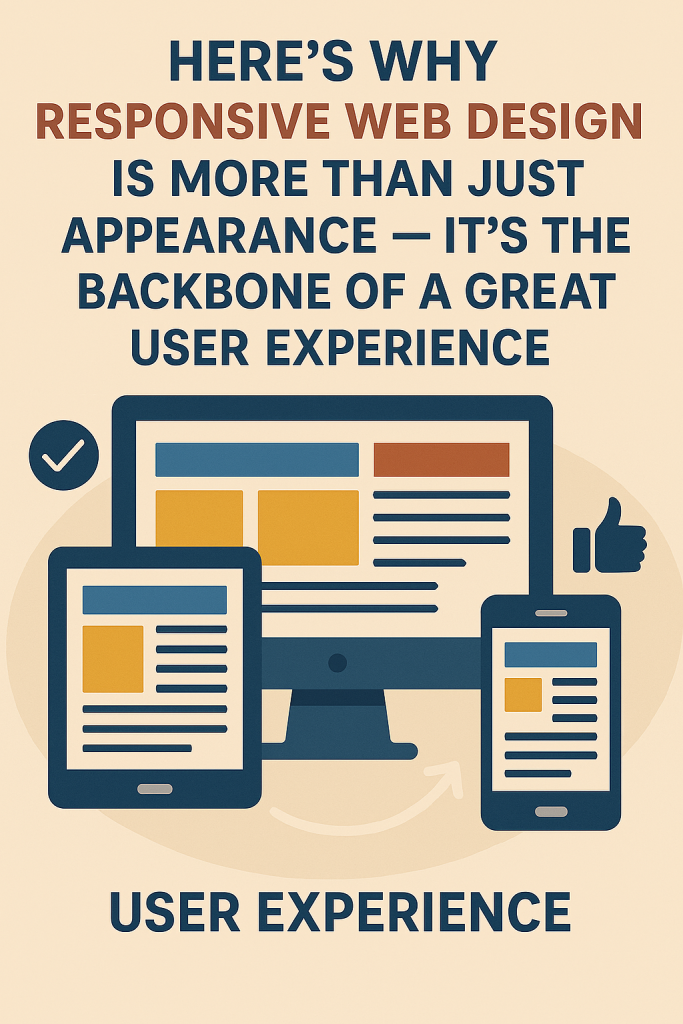
Responsive design has become a buzzword in web development, but it’s far more than a trend. In 2025, with digital engagement surging and user expectations rising, a responsive website design isn’t optional—it’s essential. Businesses that prioritize adaptable and user-centric designs see higher engagement, better rankings through SEO optimization services, and more conversions. What Is Responsive Web Design? Responsive website design is a result-driven design approach where websites adapt fluidly to different screen sizes, resolutions, and orientations. Whether it’s a desktop, tablet, or smartphone, responsive sites ensure a consistent and optimized user experience. Rather than building separate websites for diversified devices, responsive design uses CSS media queries, fluid grids, and flexible images to create one website that responds to the environment in which it’s viewed. This flexibility makes development and maintenance more efficient in the long run. The SEO Benefits of Going Responsive Enhanced Mobile-Friendliness Google prioritizes mobile-first indexing. This means that Google predominantly uses the mobile version of content for indexing and ranking. If your site isn’t mobile-friendly, it’s already at a ranking disadvantage. Lower Bounce Rates When users opens a website easily on any device, they’re more likely to stay. This lowers bounce rates, an important factor in search engine rankings. If users leave immediately because your site looks broken or hard to use, Google takes note. Improved Page Speed Responsive design encourages better optimization of images and elements for all devices, contributing to faster load times—a critical SEO optimization services factor. Fast websites keep users engaged and drive better engagement metrics, which Google rewards. How Responsive Design Enhances UX Seamless Navigation Users expect websites to function intuitively across devices. Responsive layouts ensure navigation menus, buttons, and CTAs are accessible and easy to use. A frustrating mobile experience can be a deal-breaker for visitors. Consistent Branding Maintaining visual consistency across platforms builds brand trust. Responsive design ensures that fonts, colors, and visuals remain uniform, reinforcing your brand identity whether viewed on a smartphone or widescreen monitor. Accessibility and Inclusivity A responsive site can be more accessible for users with disabilities, contributing to improved usability and broader reach. Real-World Example: Case Study of Improved Metrics A recent Speed Dot 360 project for a mid-sized ecommerce client saw a 35% increase in mobile conversions and a 40% decrease in bounce rate after implementing a fully responsive website design. Additionally, the client’s Google PageSpeed score jumped by 25 points within three weeks. “We never realized how many potential customers we were losing on mobile until we upgraded to a responsive layout. The improvement was instant.” — Client Testimonial Key Elements of a Responsive Website The Role of a UI/UX Design Agency Professional UI/UX design agency teams bring deep knowledge of user behavior, enabling data-driven design decisions. At Speed Dot 360, we integrate: All these help us create experiences that not only look great but convert better. Emerging Trends in Responsive Design (2025 and Beyond) Industry Perspectives: What Experts Are Saying According to a 2024 report by Adobe, 73% of users said they are more likely to return to a mobile-friendly website design. Google’s own research shows that 61% of users are unlikely to return to a mobile site they had trouble accessing. “Responsive design is not just a technical requirement—it’s a brand’s handshake with its users.” — UX Matters Magazine Internal Linking Strategy Responsive website design pages should include smart internal links to: This boosts SEO and enhances the user journey. Final Thoughts Responsive design is no longer just about accommodating mobile users—it’s about delivering seamless, fast, and enjoyable digital experiences across the board. It impacts SEO, brand perception, conversions, and user trust. If your site isn’t responsive in 2025, you’re not just behind—you’re invisible. Partner with Speed Dot 360 to audit, upgrade, and future-proof your website. Because first impressions now happen in the palm of your customer’s hand.
Shopify And WooCommerce in 2025: What’s Best for Growing Your Online Store?

Selecting the right ecommerce platform can either make or break your online business. Shopify and WooCommerce remain two of the most powerful contenders, but their suitability depends on your business model, growth goals, and technical requirements. This article compares both platforms as we move into 2025, factoring in cost, SEO, customization, and more. Shopify: All-in-One Simplicity Shopify is known for its ease of use, fast setup, and comprehensive support. It’s a hosted platform, meaning you don’t have to worry about hosting, security, or updates—it’s all managed for you. Pros: Cons: WooCommerce: Flexibility and Control WooCommerce is an open-source WordPress plugin that gives you full control over your website. It’s best suited for those who need custom ecommerce solutions or already use WordPress for content management. Pros: Cons: SEO and Performance Comparison WooCommerce SEO Strengths Shopify SEO Strengths Payment Gateways and Checkout Experience Shopify supports 100+ payment gateway integration options and offers a smooth, fast checkout experience that is well-optimized for conversions. WooCommerce supports many gateways, too, but the checkout process may need additional customization to be seamless. Notable Features: Marketing Tools and Integrations Shopify WooCommerce Customization & Design Freedom WooCommerce is more flexible because it’s open-source. Developers can customize every aspect of the site. Shopify is easier for beginners but may feel restrictive for advanced design changes. Real-World Use Cases Cost Comparison Over Time Shopify plans range from $39 to $399 per month. Additional costs come from apps, themes, and transaction fees. WooCommerce itself is free, but domain, hosting, premium themes, and plugins can accumulate expenses quickly. Long-Term Costs Breakdown: Cost Area Shopify (Monthly) WooCommerce (Variable) Platform $39 – $399 $0 Hosting Included $5 – $30/month Plugins/Apps $0 – $100+/mo $0 – $200+ (yearly) Maintenance Minimal Requires developer/admin User Experience and Performance Metrics Case Study: Speed Dot 360 Ecommerce Client A beauty brand consulted Speed Dot 360 to migrate from WooCommerce to Shopify to improve mobile conversions. Within 90 days: Who Should Choose What? Expert Opinions According to BuiltWith (2024), WooCommerce powers 22% of the top 1 million ecommerce sites, while Shopify leads with 28%. The gap is narrowing due to WooCommerce’s ecommerce solutions and SEO strengths. “Shopify removes the tech headache for most businesses, while WooCommerce rewards those willing to invest in custom ecommerce solutions.” — Ecommerce Weekly. Final Verdict There’s no one-size-fits-all. It depends on your resources, vision, and technical capacity. At Speed Dot 360, we help brands navigate both platforms to find the best fit for their growth through personalized audits, platform migration, and ecommerce maintenance services. Let your ecommerce tech stack be your growth engine—not your bottleneck.
How Can Google Ads Help You Achieve & Advance Your Business Goals?

In today’s competitive digital landscape, having a robust online presence isn’t an option anymore; rather, it has become a necessary way for us. One of the most effective tools for driving visibility, conversions, and business growth is Google Ads. This dynamic platform enables businesses to reach their target audience through highly customized campaigns. Whether you’re a startup or an established enterprise, leveraging PPC advertising management via Google Ads can propel you toward your strategic business goals. What Is Google Ads and Why Is It So Powerful? Google Ads is Google’s pay-per-click (PPC) advertising platform, enabling businesses to exhibit ads on Google Search, YouTube, and across the vast Google Display Network. Unlike traditional marketing, where results are often hard to track, Google Ads provides measurable insights, helping you see what works—and what doesn’t—in real-time. What makes Google Ads truly powerful is its aptitude to target people who are actively searching for your products or services. That means your business gets visibility at the exact moment potential customers are showing interest. 1. Aligning Google Ads With Your Business Goals Before launching any campaign, the key is to define clear business objectives. Whether it’s increasing website traffic, capturing leads, boosting online sales, or growing brand awareness, Google Ads provides dedicated campaign types for each goal. By choosing the right campaign type, your ads become goal-oriented from the start. 2. Reaching the Right Audience With Laser Precision Unlike mass advertising, Google Ads lets you target users based on location, interests, demographics, device types, and even their previous behavior online. This keeps you assured that your marketing budget is used effectively by focusing on audiences most likely to convert. Additionally, with advanced keyword research services, you can discover and bid on the exact terms your potential customers are using in search. This targeted approach helps you show up for high-intent queries and minimizes wasted ad spend. 3. Enhancing Lead Generation and Sales Whether you want to generate leads through form submission or drive direct eCommerce sales, Google Ads makes it possible with features like conversion tracking and smart bidding. By comprehending how users interact with your ads, Google Ads optimizes delivery to those most likely to take action. This capability becomes even more effective when integrated with paid social media advertising strategies, allowing you to retarget users across platforms like Facebook and Instagram, keeping your brand top-of-mind throughout the buyer journey. 4. Measurable ROI: A Marketer’s Dream One of the strongest reasons to invest in Google Ads is the wealth of analytics it offers. You can track impressions, clicks, conversions, and cost per acquisition (CPA), allowing for real-time performance tuning. For businesses focused on ROI, this is invaluable. You know exactly how much each lead or sale costs you, and you can make quick adjustments if a campaign underperforms. In combination with social media strategy development, you can build comprehensive marketing funnels that nurture leads through multiple touchpoints before conversion. 5. Building Brand Awareness at Scale Even if your current goal isn’t direct sales, brand awareness is crucial. Display ads and video ads are excellent for building recognition and trust with your audience. These ads appear while users are browsing their favorite websites or watching YouTube, introducing them to your brand in an unobtrusive but impactful way. This is especially helpful for new businesses or product launches. Over time, consistent visibility creates brand familiarity, increasing the likelihood of conversion when the customer is ready. 6. Leveraging Google’s Automation and AI Google Ads provides several tools powered by artificial intelligence to help advertisers maximize performance: These features not only improve efficiency but also help even small businesses compete with larger players by maximizing limited ad budgets. 7. Seamless Integration With Other Platforms One of the underrated strengths of Google Ads is how well it integrates with other tools, including Google Tag Manager, Google Analytics, and CRMs. This makes tracking user behavior and retargeting much more effective. Also, if you’re running Facebook ad campaigns, Instagram marketing services, or LinkedIn advertising solutions, you can align your targeting and messaging for a unified cross-platform strategy. This level of integration ensures your entire digital ecosystem works in harmony, improving both results and user experience. 8. Immediate Results With Long-Term Impact SEO is a long-term investment, but Google Ads offers immediate visibility. If your website is new or hasn’t yet ranked in search engines, Ads can put you in front of customers today. However, the value doesn’t stop at instant results. Over time, you can use the data from Google Ads campaigns to refine other areas of your marketing—such as website design, content strategy, and SEO. This combination of quick wins and long-term insights makes Google Ads a cornerstone of any performance-based marketing plan. Final Thoughts In summary, Google Ads is not just an advertising tool—it’s a strategic weapon that aligns directly with your business goals. Whether you’re focused on awareness, leads, sales, or brand engagement, Google Ads provides the tools, data, and automation needed to make it happen. When paired with a strong marketing strategy and expert PPC advertising management, Google Ads can deliver exceptional results—especially when synchronized with other platforms like Facebook, Instagram, and LinkedIn. It’s time to stop guessing and start targeting. With Google Ads, every click brings you closer to your goals.
10 Types of Social Media & How They Improve Your Business in 2025

Social media is no longer a nice-to-have—it’s an essential part of every brand’s digital presence in 2025. As businesses continue to prioritize social media strategy development, understanding the distinct types of platforms available can be the difference between a stagnant presence and a thriving online community. In this article, we explore 10 impactful types of social media and how each can improve and benefit your business this year and beyond. 1. Video Social Media Video content remains king. Platforms like YouTube, TikTok, Instagram Reels, and Facebook Watch allow businesses to engage with users through storytelling, product demos, how-tos, and behind-the-scenes content. Short-form videos, especially on TikTok and Instagram, are highly shareable and attention-grabbing. Brands leveraging Instagram marketing services can increase reach, boost conversions, and connect emotionally with audiences. These videos offer a deeper way to express your brand personality and increase brand loyalty. 2. Audio Social Media Audio-based platforms like Spotify, Twitter Spaces, and Clubhouse have found their niche in thought leadership and real-time interaction. Podcasts and live audio rooms help build communities and educate audiences. For businesses, creating branded podcasts or hosting live industry discussions is a strong play. It’s an intimate format that positions your brand as a subject matter expert. Plus, it helps with social media brand awareness through niche targeting. 3. Business Social Media LinkedIn, X (formerly Twitter), and even Threads are evolving as platforms for professional interaction. These networks allow brands to connect with decision-makers, recruit top talent, and share valuable B2B content. If you offer LinkedIn advertising solutions, you’re already aware of the power this platform has for lead generation. Sharing industry insights and joining relevant conversations can enhance credibility and bring in high-value clients. 4. Shoppable Social Media Instagram Shop, Facebook Marketplace, and TikTok Shopping blur the lines between content and commerce. Users can now effectively browse and purchase products directly within these apps. Businesses can showcase their product catalogs, run Facebook ad campaigns, and link users directly to checkout pages—without them ever leaving the platform. This mtigates friction in the buyer journey and significantly improves conversion rates. 5. Private or Closed Social Media Facebook Groups, Slack communities, and Discord servers are examples of closed social media networks that foster exclusivity and loyalty. Creating a branded group enables businesses to build deeper relationships, get real-time feedback, and nurture brand advocates. These platforms are ideal for community-led growth strategies where word-of-mouth and peer influence play major roles. 6. Inspirational Social Media Pinterest, Instagram, and YouTube function as inspiration boards for users seeking ideas in fashion, home décor, food, travel, and more. These platforms prioritize visual storytelling and allow brands to present their products or services in an aspirational context. With strategic social media content creation, businesses can visually demonstrate how their solutions fit into customers’ lifestyles, ultimately driving more clicks, shares, and conversions. 7. Discussion Forums Quora and Reddit remain critical spaces for answering questions, sharing insights, and showcasing your brand’s expertise. Discussion forums provide a unique opportunity to engage in authentic conversations with potential customers. Participating in relevant subreddits or forum threads builds thought leadership and generates indirect traffic to your website. 8. Review Sites Platforms like Yelp, TrustPilot, and Google Business Profile act as decision-making hubs for online buyers. Positive reviews help build credibility, while negative ones present opportunities for improvement. Engaging with reviews boosts transparency and signals your brand’s commitment to customer satisfaction. These sites are crucial for managing social media brand awareness in a trust-driven landscape. 9. Social Media Livestreams Facebook Live, YouTube Live, and Instagram Live offer real-time video broadcasting, perfect for Q&A sessions, product launches, or behind-the-scenes sneak peeks. Live video fosters instant engagement and builds trust by humanizing your brand. It also allows for direct interactions, helping deepen customer relationships and encouraging followers to take immediate action. 10. Social Blogging Networks Medium, Tumblr, and LinkedIn Articles combine blogging with social sharing features. These platforms let brands publish long-form content and promote thought leadership. Maintaining a blog on these platforms helps with SEO, builds authority, and invites user interaction through comments and shares. When integrated with broader social media strategy development, they become powerful assets for content marketing. Emerging Platforms to Watch in 2025 As the world of social media continues to thrive, new platforms are challenging the dominance of traditional networks. Channels like Threads, Bluesky, and Mastodon are gaining traction among niche audiences looking for decentralized or alternative digital spaces. Forward-thinking brands are beginning to explore these platforms to build early visibility and connect with tech-savvy, trend-aware consumers. Experimenting on these platforms can also give your brand a competitive edge, allowing you to test innovative formats and community-building strategies before the space becomes saturated. For brands focused on social media brand awareness, exploring emerging platforms in parallel with core channels ensures your strategy remains dynamic and future-proof Final Thoughts In 2025, the social media ecosystem will be more diverse, dynamic, and powerful than ever. No single platform will serve every business need. Instead, brands that identify the right mix of formats—video, audio, private groups, forums, shoppable posts—will stand out. At Speed Dot 360, we help brands like yours tap into the right channels and craft a custom strategy built for measurable growth. Whether you’re launching Facebook ad campaigns, investing in Instagram marketing services, or seeking a full-stack influencer marketing agency, our expertise ensures your social presence is more than just active—it’s effective.