
10 Types of Social Media & How They Improve Your Business in 2025
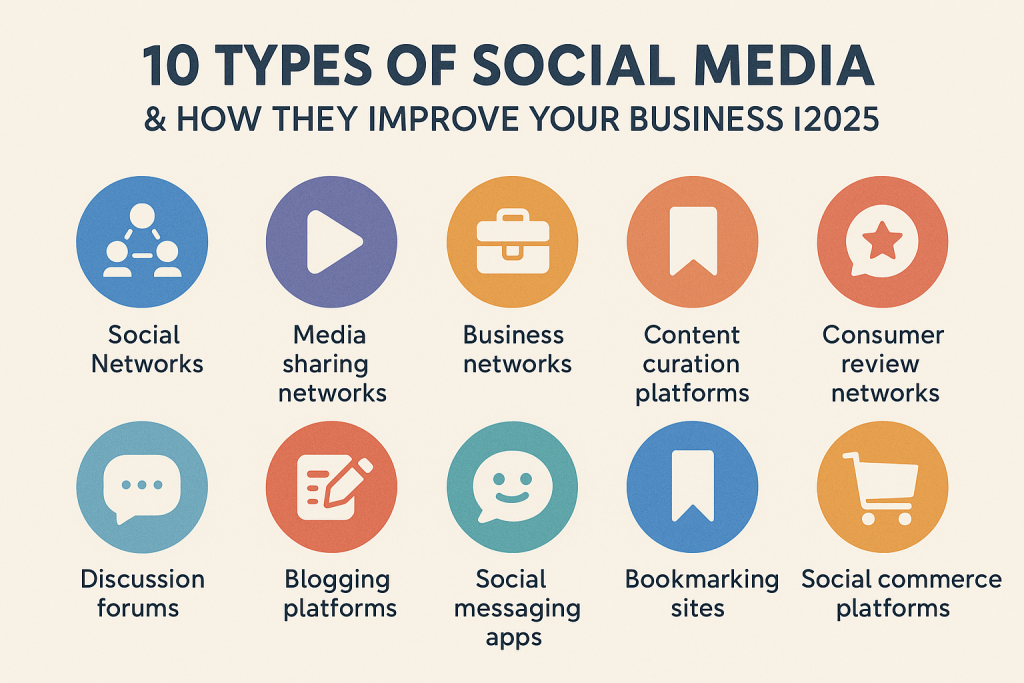
Social media is no longer a nice-to-have—it’s an essential part of every brand’s digital presence in 2025. As businesses continue to prioritize social media strategy development, understanding the distinct types of platforms available can be the difference between a stagnant presence and a thriving online community. In this article, we explore 10 impactful types of social media and how each can improve and benefit your business this year and beyond. 1. Video Social Media Video content remains king. Platforms like YouTube, TikTok, Instagram Reels, and Facebook Watch allow businesses to engage with users through storytelling, product demos, how-tos, and behind-the-scenes content. Short-form videos, especially on TikTok and Instagram, are highly shareable and attention-grabbing. Brands leveraging Instagram marketing services can increase reach, boost conversions, and connect emotionally with audiences. These videos offer a deeper way to express your brand personality and increase brand loyalty. 2. Audio Social Media Audio-based platforms like Spotify, Twitter Spaces, and Clubhouse have found their niche in thought leadership and real-time interaction. Podcasts and live audio rooms help build communities and educate audiences. For businesses, creating branded podcasts or hosting live industry discussions is a strong play. It’s an intimate format that positions your brand as a subject matter expert. Plus, it helps with social media brand awareness through niche targeting. 3. Business Social Media LinkedIn, X (formerly Twitter), and even Threads are evolving as platforms for professional interaction. These networks allow brands to connect with decision-makers, recruit top talent, and share valuable B2B content. If you offer LinkedIn advertising solutions, you’re already aware of the power this platform has for lead generation. Sharing industry insights and joining relevant conversations can enhance credibility and bring in high-value clients. 4. Shoppable Social Media Instagram Shop, Facebook Marketplace, and TikTok Shopping blur the lines between content and commerce. Users can now effectively browse and purchase products directly within these apps. Businesses can showcase their product catalogs, run Facebook ad campaigns, and link users directly to checkout pages—without them ever leaving the platform. This mtigates friction in the buyer journey and significantly improves conversion rates. 5. Private or Closed Social Media Facebook Groups, Slack communities, and Discord servers are examples of closed social media networks that foster exclusivity and loyalty. Creating a branded group enables businesses to build deeper relationships, get real-time feedback, and nurture brand advocates. These platforms are ideal for community-led growth strategies where word-of-mouth and peer influence play major roles. 6. Inspirational Social Media Pinterest, Instagram, and YouTube function as inspiration boards for users seeking ideas in fashion, home décor, food, travel, and more. These platforms prioritize visual storytelling and allow brands to present their products or services in an aspirational context. With strategic social media content creation, businesses can visually demonstrate how their solutions fit into customers’ lifestyles, ultimately driving more clicks, shares, and conversions. 7. Discussion Forums Quora and Reddit remain critical spaces for answering questions, sharing insights, and showcasing your brand’s expertise. Discussion forums provide a unique opportunity to engage in authentic conversations with potential customers. Participating in relevant subreddits or forum threads builds thought leadership and generates indirect traffic to your website. 8. Review Sites Platforms like Yelp, TrustPilot, and Google Business Profile act as decision-making hubs for online buyers. Positive reviews help build credibility, while negative ones present opportunities for improvement. Engaging with reviews boosts transparency and signals your brand’s commitment to customer satisfaction. These sites are crucial for managing social media brand awareness in a trust-driven landscape. 9. Social Media Livestreams Facebook Live, YouTube Live, and Instagram Live offer real-time video broadcasting, perfect for Q&A sessions, product launches, or behind-the-scenes sneak peeks. Live video fosters instant engagement and builds trust by humanizing your brand. It also allows for direct interactions, helping deepen customer relationships and encouraging followers to take immediate action. 10. Social Blogging Networks Medium, Tumblr, and LinkedIn Articles combine blogging with social sharing features. These platforms let brands publish long-form content and promote thought leadership. Maintaining a blog on these platforms helps with SEO, builds authority, and invites user interaction through comments and shares. When integrated with broader social media strategy development, they become powerful assets for content marketing. Emerging Platforms to Watch in 2025 As the world of social media continues to thrive, new platforms are challenging the dominance of traditional networks. Channels like Threads, Bluesky, and Mastodon are gaining traction among niche audiences looking for decentralized or alternative digital spaces. Forward-thinking brands are beginning to explore these platforms to build early visibility and connect with tech-savvy, trend-aware consumers. Experimenting on these platforms can also give your brand a competitive edge, allowing you to test innovative formats and community-building strategies before the space becomes saturated. For brands focused on social media brand awareness, exploring emerging platforms in parallel with core channels ensures your strategy remains dynamic and future-proof Final Thoughts In 2025, the social media ecosystem will be more diverse, dynamic, and powerful than ever. No single platform will serve every business need. Instead, brands that identify the right mix of formats—video, audio, private groups, forums, shoppable posts—will stand out. At Speed Dot 360, we help brands like yours tap into the right channels and craft a custom strategy built for measurable growth. Whether you’re launching Facebook ad campaigns, investing in Instagram marketing services, or seeking a full-stack influencer marketing agency, our expertise ensures your social presence is more than just active—it’s effective.
How Much Do Ads Cost in 2025?
In the flustering world of inflation, businesses can oversee a considerable difference in online advertisement, and as 2025 unfolds, businesses must adapt to new pricing models, trends, and bidding strategies. Whether you’re running PPC advertising management, leveraging social media management, or investing in Facebook ad campaigns, understanding ad costs is crucial for maximizing returns. But how much does advertising actually cost in 2025? Are prices going up, or are there ways to optimize spending? In this article, we’ll break down the latest ad pricing trends across different platforms, analyze the key factors driving these costs, and offer insights on how businesses can effectively allocate their marketing budgets. The Evolution of Digital Advertising Costs The cost of advertising is never static. It fluctuates due to platform competition, consumer behavior, economic conditions, and even technological advancements. Here’s what’s shaping ad prices in 2025: These factors create a complex pricing environment where advertisers must be strategic with their spending. Google Ads Costs in 2025 Google remains the largest digital advertising platform, but costs vary based on industry, competition, and ad format. What Influences Google Ads Pricing? To control expenses, businesses should work with a content marketing agency to improve landing page relevance and Quality Scores. Facebook & Instagram Ads Costs in 2025 Meta’s platforms (Facebook & Instagram) remain essential for digital marketing, with costs rising due to increased competition and evolving targeting options. Key Pricing Factors for Facebook Ads: Advertisers investing in Facebook ad campaigns should prioritize creative testing and audience segmentation to improve ROI. LinkedIn Ad Costs in 2025 For B2B businesses, LinkedIn is a go-to platform, but it remains one of the most expensive advertising options. Given LinkedIn’s higher costs, B2B companies should focus on email marketing campaigns and retargeting strategies to complement LinkedIn ads and reduce spending. TikTok & YouTube Ad Costs in 2025 Video-based platforms continue to dominate digital advertising. TikTok Ads YouTube Ads Short-form videos outperform static ads, making social media management critical for brands looking to boost engagement and ad efficiency. Email Advertising Costs in 2025 While many businesses overlook email marketing, it remains a highly profitable channel. Email marketing campaigns provide an affordable way to nurture leads and drive conversions without relying on expensive paid ads. What Drives Advertising Costs in 2025? Several key factors influence digital advertising expenses: 1. Industry Competition Certain industries (e.g., legal, finance, SaaS) see higher CPCs due to fierce competition. 2. Bidding Strategies Automated bidding increases efficiency but can also drive up costs if not monitored. 3. Ad Relevance & Quality A strong Quality Score (Google) or Relevance Score (Facebook) can lower costs significantly. 4. Audience Targeting Narrower targeting typically increases costs but improves conversion rates. 5. Ad Format & Placement By combining keyword research services with data-driven strategies, brands can optimize ad performance and spending. How to Lower Your Ad Costs in 2025 Want to make the most of your advertising budget? Here are some proven strategies: The Future of Ad Pricing Beyond 2025 As AI-driven ad platforms evolve, costs will continue to shift. Key trends to watch: Advertisers who adapt to these trends will be better positioned for cost-effective success. Conclusion Advertising costs in 2025 will continue to rise, but businesses that optimize their strategies can still achieve strong ROI. By staying informed and leveraging data-driven insights, brands can allocate their budgets efficiently and maximize their advertising impact in 2025.
Should Brands Advertise on Twitch?
With over 140 million monthly active users, Twitch has revolutionized from a niche gaming platform into a mainstream digital powerhouse. It’s not just for gamers anymore—Twitch has become a forefront for content creators across various industries, from music and sports to tech and lifestyle. But does that mean all brands should jump on the Twitch advertising bandwagon? For brands looking to expand their social media strategy development, Twitch presents unique opportunities, but it also comes with challenges. While the platform offers high engagement rates and influencer marketing potential, advertising here requires a deep understanding of its interactive community-driven culture. In this blog, we’ll explore the pros and cons of Twitch advertising, the available ad formats, and whether your brand should invest in this platform. Understanding Twitch as an Advertising Platform Twitch is not just another social media platform. Unlike Instagram, Facebook, or YouTube, where content is consumed passively, Twitch thrives on live interactions. Viewers engage in real-time with their favorite streamers through chat, donations, and subscriptions, fostering a deep sense of loyalty. Twitch Audience Demographics Before deciding to advertise on Twitch, brands must understand who they’re reaching: Young and tech-savvy audience: 75% of Twitch users are between 16-34 years old. Engagement-driven behavior: Twitch users watch an average of 95 minutes per day—higher than most social media platforms. Community-focused culture: Viewers trust streamers’ recommendations more than traditional ads. Unlike platforms where ads disrupt the user experience, Twitch viewers are more open to advertising when it’s done authentically, particularly when endorsed by their favorite streamers. Benefits of Advertising on Twitch Advertising on Twitch can be highly effective, but only if done correctly. Here’s why many brands find success on the platform: High Engagement and Long Watch Times Unlike traditional social media management platforms, where users scroll past ads quickly, Twitch users spend hours watching live streams. This long-form content consumption means better ad retention and engagement rates. Influencer-Led Marketing Opportunities Twitch is one of the best platforms for influencer marketing agencies to collaborate with streamers. Unlike celebrities on Instagram or TikTok, Twitch influencers engage directly and continuously with their audiences, leading to stronger brand endorsements. A Loyal and Interactive Audience The Twitch community is tight-knit and passionate. When streamers endorse a brand, their audience listens. This makes sponsorships, giveaways, and branded content far more effective than traditional display ads. Unique Advertising Formats Twitch offers multiple advertising formats beyond traditional banner ads, allowing brands to integrate more naturally into the platform’s ecosystem. These include sponsored streams, interactive overlays, and branded in-game activations. Twitch Advertising Options: Which One Works Best? Twitch provides various advertising formats that cater to different marketing objectives. Understanding these options can help brands choose the best approach for their campaigns. Twitch Partner & Affiliate Sponsorships Twitch Partners and Affiliates are streamers with dedicated followers who can run ads on their channels. Brands can collaborate with streamers for sponsored content, branded giveaways, or product placements. Works best for influencer marketing agencies that want to leverage authentic creator endorsements. Best for: Brand awareness, engagement, influencer marketing. Challenge: Requires the right streamer-brand fit to avoid audience backlash. Twitch Display & Video Ads Similar to YouTube ads, Twitch offers pre-roll, mid-roll, and display ads that appear during live streams. It can be targeted based on geography, interests, and demographics. Twitch users tend to ignore these ads, but they work well when paired with a strong call-to-action. Best for Driving website traffic, conversions, and brand exposure. Challenge: Many users install ad blockers, reducing reach. Sponsorships and Product Placements Brands can sponsor a segment of a stream or have their products featured in a streamer’s content. Works best when integrated naturally into the stream’s theme (e.g., a gaming chair brand sponsoring a gaming streamer). Viewers respond positively to organic brand integrations. Best for: Long-term brand partnerships and product awareness. Challenge: Needs to align seamlessly with the streamer’s content. Twitch Extensions and Interactive Ads Overlays and extensions allow brands to create interactive experiences during streams. Viewers can click on branded buttons to access promotions, discounts, or in-game rewards. Highly engaging and blends well with Twitch’s interactive nature. Best for: Gamified promotions and direct audience interaction. Challenge: Requires custom development, increasing costs. Challenges of Advertising on Twitch While Twitch has powerful advertising potential, brands must keep the challenges and risks in mind while dealing with the platform. High Advertising Costs Compared to other social media platforms, Twitch advertising requires a higher budget. Running effective social media content creation campaigns on Twitch often involves: Paying for sponsorships or streamer collaborations. Investing in high-quality branded overlays or interactive ads. Allocating a substantial ad spend for display and video ads. 💡 Solution: Start with smaller collaborations before committing to large-scale sponsorships. Audience Mismatch & Brand Fit Not every brand’s social media strategy development is a natural fit for Twitch. Twitch is heavily dominated by gaming and tech-savvy users. Brands in fashion, beauty, or B2B industries may struggle to find the right audience. Solution: Analyze Twitch’s audience and test smaller campaigns before scaling up. Negative Brand Associations Twitch is known for its unfiltered, live nature, which can lead to risks: Some streamers may engage in controversial discussions, affecting brand perception. Live chat interactions are hard to control, leading to potential brand reputation issues. Solution: Partner only with trusted, well-vetted streamers who align with your brand values. Difficult ROI Measurement Unlike platforms like Facebook and Instagram, Twitch’s analytics tools are less refined, making it harder to track ROI. Conversion tracking is limited, especially for brand awareness campaigns. Engagement metrics (viewership, chat interactions) don’t always translate to sales. Solution: Use UTM parameters and influencer promo codes to track performance more effectively. Should Your Brand Advertise on Twitch? Key Considerations Not every brand will benefit from Twitch advertising. Here are a few key questions to ask before investing in Twitch ads: Does Your Target Audience Use Twitch? If your brand targets: Gamers, tech enthusiasts, Gen Z, or millennial males → Twitch is a great fit. Older audiences, B2B clients, or industries unrelated to entertainment/gaming
Revolutionize Your Business with Different Social Media Content Types | A Lifesaver To Make Big
Do you want to grow your business through effective social media marketing content creation? Then, delve into the diversified social media content types for setting your business apart. Social media marketing is a renowned pit stop that can essentially illuminate your brand’s path toward glory. However, without the essence of social media marketing knowledge, you are just driving your brand astray. In this blog, we will help you discover efficient types of content that can resonate with your target audience with ease and help you grow your wings of profits effectively. What Are the 4 Content Pillars for Social Media? Before delving deep into the types of content, acknowledging the four prime content pillars will give you a head start in your future social media strategy. In order to diversify your brand, you need to enable your brand to focus on a specific communication medium for social community interaction. The themes mentioned below are the foundation of your social media strategy that can sustain your social media workflow. Promotional content Educational content Inspirational content Entertaining content However, the content strategy is directly proportional to the service or product you offer to your audience. Therefore, comprehensively analyze your services and craft a perfect social media content plan; for ultimate assistance, you can always partner up with a social media marketing agency in the USA and lead your brand to success. Understanding Social Media Content Types Different platforms require tailored content strategies. Here’s a breakdown of the top content types that businesses should integrate into their social media marketing plan: Short-Form Video Content Short-form videos dominate platforms like Instagram Reels, TikTok, and YouTube Shorts. These videos are engaging, highly shareable, and perfect for increasing brand visibility. Why It Works: Captures attention within seconds. Encourages shares, boosting organic reach. Ideal for showcasing products and behind-the-scenes insights. Best Platforms: TikTok, Instagram Reels, YouTube Shorts, Facebook Stories. Long-Form Educational Content Long-form videos and blog posts work well on platforms like YouTube and LinkedIn, offering in-depth insights into industry trends and thought leadership. Why It Works: Positions brands as experts in their industry. Enhances trust and credibility. Drives more engagement through valuable knowledge-sharing. Best Platforms: YouTube, LinkedIn, Medium, company blogs. Carousel Posts & Infographics Carousels on Instagram and LinkedIn help brands share step-by-step guides, industry insights, and statistics in an engaging format. Infographics enhance content readability and shareability. Why It Works: Boosts engagement with swipe-friendly content. Easily digestible, making complex information accessible. Encourages and shares, increasing reach. Best Platforms: Instagram, LinkedIn, Pinterest. User-Generated Content (UGC) UGC is any content customers create, such as testimonials, reviews, or social media posts featuring a brand’s products. Why It Works: Builds authenticity and social proof. Increases brand loyalty through community engagement. Encourages word-of-mouth marketing. Best Platforms: Instagram, Twitter, Facebook, TikTok. Live Streaming & Webinars Live video has truly revolutionized how businesses interact with their audience. From product launches to Q&A sessions, real-time engagement fosters deeper connections. Why It Works: Real-time interaction enhances audience engagement. Strengthens brand trust and transparency. Prioritized by platform algorithms, increasing visibility. Best Platforms: Facebook Live, Instagram Live, YouTube Live, LinkedIn Live. Influencer Partnerships & Collaborations Working with influencers extends a brand’s reach and credibility. Whether micro or macro-influencers, their endorsement can significantly impact your business. Why It Works: Taps into established audiences. Increases conversion rates through trusted recommendations. Works well with Instagram marketing services and Facebook ad campaigns. Best Platforms: Instagram, TikTok, YouTube, LinkedIn. Polls, Quizzes, and Interactive Content Engaging with your audience through polls and quizzes is a great way to gather insights while keeping users entertained. Why It Works: Encourages audience participation. Provides valuable consumer feedback. Boosts engagement rates on social platforms. Best Platforms: Instagram Stories, Twitter Polls, Facebook. Storytelling Through Blog Posts Well-crafted blog posts drive traffic to websites and position brands as industry leaders. A strong social media content creation strategy should include blog links shared across social channels. Why It Works: Increases website traffic and SEO rankings. Strengthens brand credibility and thought leadership. Provides long-term value to readers. Best Platforms: LinkedIn, Medium, company websites, and Facebook. What is the 50/30/20 Rule for Social Media? The 50/30/20 rule is an essential guideline for maintaining balance in your social media content strategy: 50% Value-Based Content: Educational posts, industry insights, and how-to guides that provide value to your audience. 30% Promotional Content: Posts that showcase your products, services, and customer testimonials. 20% Engagement-Driven Content: Polls, interactive posts, and memes to foster community engagement. This rule ensures that brands don’t overwhelm followers with excessive promotional posts, allowing for a well-rounded social media presence. How Speed Dot 360 Will Thrive to Skyrocket Your Business With SMM At Speed Dot 360, we specialize in social media management, offering comprehensive solutions tailored to each brand’s needs. Whether it’s LinkedIn advertising solutions or paid social media advertising, we ensure data-driven strategies that deliver results. Our team crafts high-quality social media content calendars that align with your business objectives. We analyze social media metrics, optimize ad spend, and create campaigns that truly connect with audiences. With years of expertise in Facebook ad campaigns and Instagram marketing services, we position brands in front of their target customers, ensuring maximum impact and ROI. Whether you’re a startup or a large enterprise, Speed Dot 360 provides the perfect blueprint for digital success. Partner with us today and take your social media game to the next level! Conclusion Adapting diverse social media marketing content types is key to maximizing engagement and business growth. By leveraging short-form videos, interactive content, and influencer collaborations, you can build a robust digital presence. Want to revamp your social media game? Connect with Speed Dot 360, and let’s create a winning social media strategy development plan to elevate your brand!