
Marketing Stats You Must Know in 2025
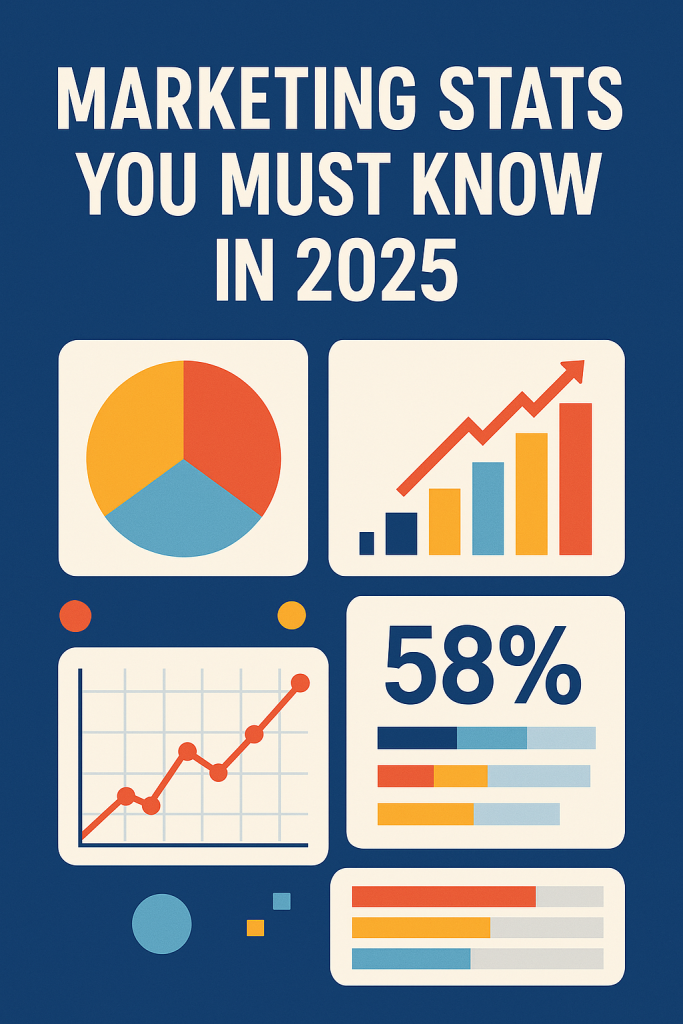
Marketing is more data-driven than ever, and staying ahead in 2025 means understanding the key statistics shaping digital strategies. From social media management to PPC advertising management, brands must adapt to emerging trends and evolving consumer behaviors to remain competitive. This article explores the most crucial marketing statistics for 2025, offering insights into digital advertising, content strategies, social media, email marketing, and more. Whether you’re a marketer, a business owner, or part of a content marketing agency, these numbers will guide your decision-making in the year ahead. The State of Digital Marketing in 2025 Digital marketing is continuing its rapid evolution, with businesses increasing their online advertising budgets to engage consumers effectively. Here are some of the key stats defining the industry: With digital advertising growing, businesses must invest in AI-driven strategies, data analytics, and targeted advertising to maximize ROI. Social Media Marketing: The Driving Force of Digital Strategies Social media remains a powerhouse for customer engagement, brand awareness, and sales. Platforms continue to evolve, and businesses must stay agile to keep up with changing trends. To stay competitive, businesses should focus on social media management, leveraging paid and organic strategies to enhance their digital presence. Email Marketing: Still One of the Highest ROI Channels In the evolving world of instant messaging apps and social media, email marketing remains a prominent digital marketing channel. Businesses that invest in automated, data-driven email marketing campaigns will see better customer engagement and higher conversion rates. Maximizing ROI with Paid Search With increasing competition in digital marketing, PPC advertising management is more crucial than ever for businesses aiming for higher conversions. For businesses looking to scale, PPC advertising management should focus on data-driven strategies, A/B testing, and AI-powered ad optimizations. SEO & Content Marketing: The Key to Long-Term Growth SEO and content marketing continue to thrive for organic visibility and brand authority. As search algorithms become more advanced, businesses need to invest in high-quality, intent-driven content. Businesses working with a content marketing agency should prioritize evergreen content, SEO-optimized blogs, and multimedia integration to improve organic traffic. AI and Automation: The Future of Marketing Efficiency AI is reshaping the marketing landscape by improving efficiency, personalization, and customer experiences. Marketers should embrace AI-powered automation tools to enhance efficiency and drive better results across digital channels. Capturing the Mobile-First Audience With mobile usage continuing to rise, brands must prioritize mobile-first marketing strategies. For businesses, optimizing their digital assets for mobile-first experiences will be critical to staying relevant. Video Marketing: Dominating the Digital Space Video continues to be one of the most engaging content formats, with consumers preferring visual storytelling over static content. To stay ahead, businesses should invest in high-quality video content to enhance brand storytelling and audience engagement. Conclusion Marketing in 2025 is all about leveraging data, automation, and personalization to create effective digital campaigns. By staying informed about these marketing statistics, businesses can make strategic decisions that drive growth, engagement, and revenue in 2025.
The Right Use Of AI In Digital Marketing
Artificial Intelligence (AI) came into our lives with a revolutionary change, commenced in a simple world, and has now set a trend that is no longer a futuristic concept; AI has changed how we do our work and has essentially transformed the digital marketing landscape as well. Brands use AI for content generation, SEO, PPC advertising management, and customer engagement. However, as AI becomes more embedded in marketing, ethical concerns arise about transparency, privacy, and authenticity. For businesses that rely on SEO optimization services, AI-driven automation can streamline processes, but over-reliance on AI-generated content and unethical data use can damage credibility. This article explores the ethical and strategic use of AI in digital marketing, ensuring that brands can harness its potential without compromising integrity. The Fine Line Between Innovation and Manipulation AI is evolving how businesses interact with consumers, but where should the line be drawn? The ethical use of AI means ensuring that algorithms enhance rather than manipulate user experiences. Marketers must ensure AI tools are used transparently and fairly, avoiding deceptive practices that could mislead customers or exploit their data. AI-driven marketing should prioritize user trust, ensuring that automation enhances experiences rather than replaces genuine human interaction. Ethical AI respects user autonomy, avoids manipulative tactics, and provides value-driven engagement rather than focusing solely on conversions. Key Ethical Considerations: Transparency in AI-driven decision-making Avoiding AI-generated misinformation Preventing AI Bias in advertising and content delivery Balancing Automation with Authenticity AI tools like ChatGPT and Jasper can assist in content creation, but blindly using AI-generated content can lead to plagiarism, misinformation, and generic output. Content marketing agencies should balance AI efficiency with human oversight to ensure that content remains original, engaging, and contextually accurate. AI can be leveraged to generate first drafts, analyze trends, and optimize readability, but final content should always be reviewed by human editors. While AI can speed up production, ethical concerns arise when AI content is misrepresented as human-written or used to create misleading narratives. Best Practices for Ethical AI Content Creation: Ensure AI-generated content is reviewed and edited by humans Avoid misleading AI-generated narratives Disclose AI involvement in content production Use AI to assist, not replace, creative content teams Enhancing Search Without Gaming the System SEO has evolved with AI, making keyword research services more efficient. AI tools analyze user intent and suggest optimized keywords, but some businesses misuse AI to manipulate rankings with keyword stuffing or AI-generated spam content. Ethical AI in SEO ensures that search results remain valuable to users. AI should be used for data-driven insights, improving search intent alignment, and refining content strategies rather than exploiting algorithm loopholes. Ethical SEO Practices with AI: Use AI-driven keyword insights responsibly Avoid auto-generated articles with no human review Prioritize high-quality, informative content Leverage AI for intent-based content optimization Transparency and Fair Bidding Practices PPC advertising management relies heavily on AI for real-time bidding and ad targeting. While AI optimizes campaigns, there is a risk of manipulative practices such as inflated ad engagement or non-transparent targeting. Using AI in PPC should focus on creating a fair and efficient bidding system that maximizes ROI while respecting ethical standards. Marketers should ensure that AI-powered ad placements provide genuine value and do not mislead audiences with overly optimized messaging. Ensuring Ethical AI Use in PPC: Clearly disclose AI-driven ad placements Avoid misleading AI-generated ad copies Respect user privacy when targeting ads Ensure fair bidding practices to prevent price manipulation Ethical Outreach vs. Automation Abuse AI can streamline link-building services by identifying high-quality backlink opportunities, but mass AI-generated outreach often results in spammy, irrelevant links that hurt credibility. Marketers should ensure that AI is used to build meaningful partnerships rather than automate outreach without context. Ethical link-building should prioritize genuine connections and high-authority sources rather than excessive automation. Ethical Link Building with AI: Use AI for research, not for mass automation Personalize outreach efforts with human input Avoid black-hat AI tactics like fake link networks Give strict attention to quality over quantity when building backlinks Personalization Without Privacy Invasion AI-driven chatbots enhance customer interactions, but they must not deceive users into thinking they are interacting with humans. Transparency is key, and brands should avoid using AI-generated conversations to manipulate or mislead customers. AI chatbots should enhance user experience through relevant, quick responses while allowing seamless human escalation when necessary. Brands should also prioritize ethical data collection, ensuring chatbots do not store unnecessary user information. Best Practices for Ethical AI Chatbots: Clearly indicate chatbot interactions Use AI for assistance, not manipulation Ensure chatbots respect customer privacy Allow human intervention when necessary Ensuring Compliance in Digital Marketing AI-driven analytics provide valuable insights, but ethical concerns arise when AI is used to track user behavior without consent. Organizations must comply with data protection rules like GDPR and CCPA. In addition, transparency in data collection and AI usage is essential to maintaining consumer trust. Businesses should prioritize security, anonymization, and explicit consent when handling user data. Key Privacy Considerations: Obtain explicit user consent before collecting data Anonymize data when possible Be transparent about AI’s role in data analysis Implement data protection measures to prevent breaches Ethical Influencer Targeting & Engagement AI helps brands identify influencers and analyze engagement, but some brands misuse AI-generated engagement, such as fake followers and auto-generated comments. The ethical use of AI in social media marketing ensures genuine audience interactions and prevents misleading metrics. AI should be used to enhance engagement strategies rather than fabricate false audience growth. How to Use AI Ethically in Social Media: Avoid AI-generated fake engagement Disclose AI-driven influencer partnerships Use AI insights for authentic audience engagement Ensure AI does not manipulate social sentiment How to Use AI Without Losing Credibility? Consumers value authenticity, and over-reliance on AI can erode trust. Ethical AI practices ensure that brands maintain credibility and foster long-term relationships with their audience. Brands should be upfront about AI’s role in their marketing strategies and avoid using AI to manipulate user behavior or perceptions. Building Consumer Trust with AI: Use AI as
The Evolution of Voice Search | How To Stay Ahead?

In the era of revolutionizing technologies and consistently tailoring themselves for user convenience, voice search has also joined the pack. It has transformed the way people interact with search engines, making queries more conversational and immediate. As AI-powered assistants like Siri, Google Assistant, and Alexa continue to improve, businesses must adapt their SEO strategies accordingly. The increasing reliance on voice search has pushed brands to rethink traditional optimization techniques. A digital branding agency plays a key role in helping businesses navigate these changes by refining their content for voice-friendly searches and improving their online presence. In this blog, we’ll explore how voice search has evolved, its impact on SEO, and blueprints to gain a competitive edge in this swiftly evolving landscape. The Rise of Voice Search and Its Evolution Voice search has come a long way since the early days of speech recognition technology. Initially, voice commands were clunky and inaccurate, but advancements in AI and natural language processing (NLP) have made them more seamless. Key Milestones in Voice Search Evolution: 2010s: Introduction of voice assistants like Siri (2011), Google Voice Search (2012), and Amazon Alexa (2014). 2020s: Smart speakers and voice-activated devices surge in popularity. 2024 and Beyond: AI-driven voice search capabilities enhance user intent recognition and deliver more precise search results. With more people relying on voice assistants for searches, brands must optimize their content to align with this trend. How Many People Used Voice Search in 2024? The number of voice search users has been steadily rising. According to recent statistics, over 157.1 million people in the U.S. alone used voice search in 2024, marking a 2.8% increase from 2022. This growing adoption highlights the importance of optimizing digital content for voice-based interactions. With more consumers relying on smart assistants for daily queries, businesses must integrate voice search strategies into their SEO efforts. How Voice Search is Changing SEO Voice search has shifted the way users interact with search engines, making traditional keyword-based optimization less effective. Let’s explore the major changes it brings to SEO. Conversational Keywords and Natural Language Processing Unlike traditional text-based searches, voice queries are more conversational. Instead of searching for “best restaurants NYC,” a user might say, “What are the best restaurants in New York City?” Importance of long-tail keywords and question-based phrases. Using keyword research services to identify trending voice search queries. The Shift to Mobile and Local SEO With most voice searches happening on mobiles, mobile-friendliness is critical. Additionally, voice search heavily favors local results. Optimize Google Business Profile for accurate business details. Improve site speed and ensure mobile responsiveness. Featured Snippets and Position Zero Many voice search responses pull answers from featured snippets. To improve visibility: Structure content in a Q&A format. Use bullet points, lists, and concise paragraphs. Implement on-page SEO strategies for better snippet optimization. Strategies to Optimize for Voice Search Focus on Long-Tail and Conversational Keywords To match natural speech patterns: Identify voice-specific keywords using SEO optimization services. Create content that answers common user questions. Improving Website Speed and Mobile Friendliness Google prioritizes fast-loading sites in voice search results. Key actions include: Compressing images and minimizing JavaScript. Using AMP (Accelerated Mobile Pages) for faster loading. Optimizing for Local Voice Search Since a large portion of voice searches are local, businesses should: Optimize Google Business Profile with accurate information. Include location-based keywords in metadata and content. Encourage customer reviews to improve credibility. Enhancing Content for Voice Search To increase discoverability: Implement structured data (Schema Markup) to assist search engines in understanding content better. Create FAQ pages to directly answer voice queries. Keep content concise and direct to match voice search responses. Future Trends in Voice Search As AI-driven voice assistants continue to evolve, several key trends are shaping the future: AI and Machine Learning Integration: AI-driven assistants will become even smarter, enhancing personalization. Voice Search for E-commerce: Voice-powered shopping is on the rise, with more users making purchases through voice commands. Multilingual Voice Search Optimization: Expanding global accessibility through voice-enabled translations. Conclusion Voice search is no longer a futuristic trend—it’s an essential shift in how people interact with search engines. Businesses must refine their SEO strategies to align with natural language processing, mobile optimization, and local search improvements. By leveraging on-page SEO strategies and enhancing content for voice queries, brands can stay ahead of the competition. Start optimizing for voice search today to enhance visibility, improve engagement, and future-proof your digital presence! FAQs Why is voice search becoming more popular? Voice search is growing due to improvements in AI-driven assistants, faster response times, and the convenience of hands-free searching. How can businesses optimize for voice search? They can optimize by using conversational keywords, improving site speed, optimizing for local search, and structuring content in a question-answer format. What role do SEO optimization services play in voice search? SEO services help businesses refine their strategies by conducting keyword research, improving content structure, and ensuring mobile compatibility. How does voice search impact traditional SEO? Voice search prioritizes natural language processing, long-tail keywords, and featured snippets, requiring a shift from traditional keyword-focused strategies. Is voice search relevant for all industries? Yes, industries like e-commerce, healthcare, and local businesses benefit greatly from voice search optimization.
SEO Trends That Are Already Shaping the Web in 2025
As the digital world continues evolving, SEO optimization services are no longer just about keywords and backlinks. In 2025, search engines will prioritize user experience, AI-driven content, and personalized search results. Businesses must stay ahead by implementing the latest SEO trends to maintain visibility and competitiveness. In this blog, we’ll explore the most impactful SEO trends shaping the web in 2025 and how you can leverage them to boost your rankings. AI and Machine Learning in SEO Artificial Intelligence (AI) and machine learning are reestablishing how search engines rank content. Google’s AI Algorithms: Google’s RankBrain and MUM (Multitask Unified Model) enhance search intent recognition. AI Content Optimization: Tools like Surfer SEO and Clearscope help refine content based on search patterns. Chatbots & Virtual Assistants: AI-powered assistants improve user engagement and dwell time. With AI-driven insights, businesses can refine content strategies and enhance website rankings. Voice Search Optimization Voice searches continue to grow, making it crucial to adapt SEO strategies for conversational queries. Long-Tail Keywords: Focus on natural, question-based phrases (e.g., “What are the best SEO practices for 2025?”). Featured Snippets: Optimizing for snippets increases the chances of voice search visibility. Local SEO Focus: Many voice searches are location-based, making local SEO agency services essential. As intelligent assistants become more prevalent, businesses must ensure their content aligns with voice search trends. E-E-A-T and Content Authority Google’s E-E-A-T (Experience, Expertise, Authoritativeness, Trustworthiness) framework plays a significant role in rankings. Expert-Driven Content: Well-researched and authoritative content ranks higher. High-Quality Backlinks: Off-page SEO solutions improve credibility. Transparent Authorship: Featuring credible authors and citations enhances trust. Incorporating E-E-A-T principles helps establish long-term authority in search results. Video SEO and Visual Search With platforms like YouTube, TikTok, and Google Lens, optimizing multimedia content is crucial. Video Transcriptions: Adding transcripts improves search visibility. Optimized Thumbnails & Metadata: Engaging visuals increase click-through rates. Alt Text for Images: Enhances accessibility and technical SEO audit effectiveness. Leveraging visual search trends helps brands reach a broader audience through multiple search formats. Zero-Click Searches and SERP Features Zero-click searches—a new feature that allows users to get answers directly from the search page—are rising. Featured Snippets: Optimizing for question-based searches increases SERP prominence. People Also Ask (PAA): Addressing common queries enhances content discoverability. Rich Snippets & Schema Markup: Improves structured data interpretation by search engines. Businesses must adapt their SEO strategies to align with Google’s evolving SERP landscape. Mobile-First Indexing and Page Experience Google prioritizes mobile-first indexing, emphasizing page speed and user experience. Responsive Design: Mobile-friendly sites improve ranking performance. Core Web Vitals: Metrics like Largest Contentful Paint (LCP) impact SEO rankings. Accelerated Mobile Pages (AMP): Enhancing mobile loading speeds boosts engagement. Ensuring mobile-first optimization is key to staying competitive in 2025. Programmatic SEO and Automated Content Scaling Brands leverage automation to scale their SEO efforts efficiently. AI-Generated Content: Enhances large-scale article creation. Automated Internal Linking: AI tools streamline website structure. Data-Driven Keyword Research: AI-powered keyword research services refine content strategies. Automating SEO processes allows businesses to scale content without sacrificing quality. Local SEO and Hyper-Personalization With personalized search results, local businesses must optimize for hyper-local SEO. Google My Business Optimization: Keeps listings updated for local searches. Localized Keywords: Using geo-specific terms improves visibility. Customer Reviews & Citations: Enhances local credibility. A local SEO agency ensures businesses remain visible in location-based searches. Sustainable and Ethical SEO Practices Google is prioritizing sustainability and ethical SEO tactics. Eco-Friendly Hosting: Websites with green certifications gain preference. User Privacy Compliance: Adhering to GDPR and CCPA regulations builds trust. Long-Term SEO Strategies: Avoiding black-hat techniques ensures stable rankings. Brands focusing on ethical SEO gain long-term credibility and ranking stability. The Rise of Web3 and Decentralized SEO Web3 is reshaping how digital content is accessed and ranked. Blockchain-Verified Content: Reduces misinformation and enhances credibility. Decentralized Search Engines: Alternative search engines challenge Google’s dominance. NFT & Crypto SEO Strategies: Emerging trends in blockchain-based marketing. Keeping up with Web3 advancements ensures businesses stay ahead in the evolving digital ecosystem. Why Choose Speed Dot 360 for SEO Services? At Speed Dot 360, we are a leading SEO optimization services provider, offering: AI-powered keyword research services for precision targeting. Local SEO agency solutions to enhance visibility in location-based searches. On-page SEO strategies that align with Google’s latest algorithms. Technical SEO audits to optimize website performance. Off-page SEO solutions that boost domain authority. Our expertise ensures that businesses stay ahead in the evolving SEO landscape. Conclusion SEO in 2025 is defined by AI-driven personalization, mobile-first indexing, and ethical search strategies. Businesses must adapt to technical SEO audit requirements, focus on high-quality content, and embrace automation for long-term success. At Speed Dot 360, we help businesses implement cutting-edge SEO strategies, ensuring they stay visible and competitive in search results. Whether you need on-page SEO strategies or off-page SEO solutions, our team delivers results-driven SEO optimization services. Ready to future-proof your SEO strategy? Contact Speed Dot 360 today! Frequently Asked Questions (FAQs) What are the most important SEO trends in 2025? The key SEO trends in 2025 include AI-driven content optimization, voice search readiness, mobile-first indexing, zero-click searches, and the importance of E-E-A-T (Experience, Expertise, Authoritativeness, Trustworthiness). Businesses should focus on user experience and structured data to stay ahead. How does AI impact SEO strategies? AI plays a pivotal role in monitoring user intent, automating content optimization, and improving search rankings. Tools like Google’s RankBrain and MUM help refine search results, while AI-driven content tools assist in creating high-quality, relevant content. Why is local SEO more important than ever in 2025? With hyper-personalized search results, businesses need to optimize for local searches. Updating Google My Business profiles, gathering customer reviews, and using geo-targeted keywords are essential for improving local search rankings and visibility. How can businesses prepare for zero-click searches? To optimize for zero-click searches, businesses should target featured snippets, use structured data markup, and answer commonly searched questions concisely. Appearing in Google’s “People Also Ask” section can also increase visibility. What are the benefits of a technical SEO audit? A technical SEO audit helps
How SEO & AEO Can Accelerate Your Organic Traffic

In today’s digital landscape, businesses must go beyond traditional SEO techniques to gain visibility. While SEO optimization services remain essential, the rise of Answer Engine Optimization (AEO) is reshaping how search engines deliver results. AEO focuses on optimizing content for direct answers, voice searches, and AI-driven queries, ensuring that businesses rank effectively in search results and gain organic traffic. At Speed Dot 360, we stay ahead of evolving search trends by implementing cutting-edge on-page SEO strategies and AEO techniques to boost visibility. In this blog, we’ll explore how integrating AEO with SEO can supercharge your organic traffic and help your brand thrive. What is Answer Engine Optimization (AEO)? AEO is a strategy designed to optimize content for search engines that prioritize direct answers, such as Google’s Featured Snippets, Knowledge Panels, and AI-driven assistants like Siri and Alexa. Unlike traditional SEO, which focuses on ranking for keywords, AEO ensures that your content directly answers user queries in a structured and concise format. Key Components of AEO: Structured Data Markup: Structured data markup allows search engines to understand the content better, improving the chances of appearing in rich results. Question-Based Content: Optimizing for “how-to,” “what is,” and “best” queries enhances answerability. Voice Search Optimization: As voice searches increase, content should be conversational and formatted for spoken queries. Fast Page Load Speed: Search engines prioritize sites with optimal performance and user experience. Mobile Optimization: With most searches occurring on mobile devices, ensuring a mobile-friendly website is critical for ranking. Content Depth and Readability: AEO requires content that is both informative and easy to digest, making clarity and organization essential. By leveraging AEO alongside on-page SEO strategies, businesses can achieve higher rankings and improved discoverability. The Synergy Between SEO & AEO While SEO and AEO share similarities, they serve distinct purposes. SEO enhances visibility across traditional search results, whereas AEO ensures that your content is optimized for AI-driven searches and instant answers. How AEO Complements SEO: Keyword Optimization vs. Answer Optimization: SEO targets search terms, while AEO focuses on structuring content to provide instant answers. SERP Presence: SEO improves rankings, whereas AEO enhances visibility in featured snippets and AI-powered search assistants. Technical SEO Audit & Schema Implementation: SEO includes site audits, while AEO relies heavily on structured data to enhance understanding. Behavioral Insights: SEO tracks user behavior through analytics, whereas AEO prioritizes engagement by ensuring users find the right answers quickly. For businesses to maximize their organic reach, integrating off-page SEO solutions with AEO best practices is key. 10 Ways to Implement AEO & SEO for Maximum Organic Traffic 1. Optimize for Featured Snippets Google’s Featured Snippets display concise answers at the top of search results. Structure your content with clear, scannable headings, bullet points, and well-defined paragraphs to increase snippet chances. 2. Improve Website Structure with Technical SEO A well-structured website enhances both SEO and AEO. Conducting a technical SEO audit ensures that your site is crawlable, mobile-friendly, and free of indexing errors. 3. Create Question-Based Content Develop content that answers common user queries. Use tools like “People Also Ask” and AI-driven keyword research to align with AEO-focused search trends. 4. Implement Schema Markup Structured data assists search engines in comprehending content contextually. Use schema markup to enhance product descriptions, FAQs, and local SEO results. 5. Enhance Page Speed & UX Google prioritizes websites with fast loading speeds. Compress images, enable browser caching, and optimize code to improve user experience. 6. Focus on Voice Search Optimization With voice assistants on the rise, content should be conversational and concise. Short, direct responses improve the likelihood of ranking in voice search queries. 7. Build High-Quality Backlinks A strong off-page SEO solution involves acquiring authoritative backlinks. Guest blogging, influencer collaborations, and digital PR help boost credibility and domain authority. 8. Enhance Local SEO for Better Visibility Local businesses can benefit from AEO by optimizing their Google My Business profile, local citations, and customer reviews to appear in “near me” searches. 9. Optimize for Zero-Click Searches Many searches now result in answers without users clicking through to websites. Creating content that aligns with zero-click searches ensures brand visibility despite this trend. 10. Leverage AI-Generated Insights for SEO Machine learning and AI-driven analytics provide deeper insights into search trends, allowing businesses to adjust their strategies in real time to remain competitive. By incorporating these tactics, businesses can achieve sustainable organic traffic growth and long-term digital success. The Future of SEO & AEO Search engines are rapidly evolving, integrating AI and machine learning to improve search results. Future-proofing your strategy requires the following: AI-Driven Content Creation: Automated tools that generate user-intent-based content. Entity-Based SEO: Focusing on topic clusters rather than individual keywords. Zero-Click Searches: Optimizing for Google’s no-click results ensures brand visibility even without direct website visits. Conversational AI Integration: Businesses that adopt AI-powered chat interfaces and automated customer support can enhance engagement and user satisfaction. Multimodal Search Optimization: Optimizing for a combination of text, image, and voice searches ensures broader reach across different user behaviors. Businesses that stay miles ahead of these trends are likely to have a leg up and skyrocket in search rankings and organic traffic acquisition. Ongoing Challenges for AEO One thing is certain with Google and other search engines like Bing: they are in a constant state of evolution. As AI-driven search models become more prevalent, search algorithms continuously shift, making AEO strategies unpredictable. What works today to secure a spot in Google’s Featured Snippets or voice search results may become obsolete with the next algorithm update. Additionally, competition among businesses for prime SERP positions remains fierce. With advancements in AI-generated content and machine learning, brands must constantly refine their on-page SEO strategies and optimize structured data to maintain visibility. This dynamic environment makes it essential for businesses to stay alert to the trends and adjust their AEO tactics accordingly. Conclusion SEO and AEO are no longer separate strategies—they work hand in hand to maximize organic reach. While SEO optimization services focus on rankings, AEO ensures content is easily accessible for AI-driven searches