
The Power of Social Proof in Digital Marketing: How to Leverage Reviews and Testimonials
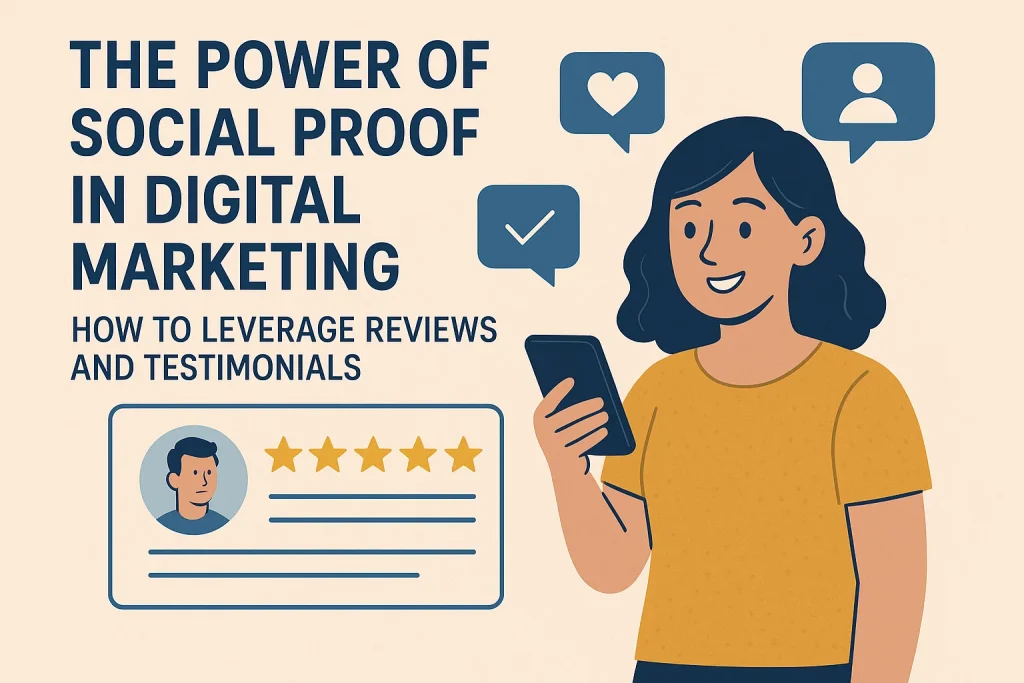
In today’s competitive digital landscape, building trust with potential customers is crucial for any business. Consumers are constantly bombarded with advertisements, promotions, and brand messages, making it harder for companies to stand out and build credibility. One of the most effective ways to influence purchasing decisions and increase brand trust is through social proof—the concept that people rely on the actions and opinions of others to guide their decisions. Social proof is a powerful psychological phenomenon that plays a significant role in digital marketing. It is the idea that individuals will conform to what they believe others are doing. In the context of online shopping or services, this often manifests as customer reviews, testimonials, user-generated content, and social media endorsements. In this blog, we’ll explore the power of social proof in digital marketing, how it can be leveraged to build credibility, and actionable steps to make the most of customer reviews and testimonials to drive sales and brand loyalty. What is Social Proof and Why Does it Matter? Social proof is the idea that people are influenced by the actions, behaviors, or opinions of others when making decisions. This concept has been around for decades, but in the age of the internet, it has taken on new forms—mainly through reviews, testimonials, and user-generated content. Why does social proof matter so much in digital marketing? Different Types of Social Proof and How to Use Them There are several types of social proof you can use in your digital marketing efforts. Let’s take a closer look at each: 1. Customer Reviews Customer reviews are one of the most common and effective forms of social proof. They allow potential customers to see firsthand accounts of what others think about your product or service. Positive reviews can significantly impact your SEO and conversion rates, making it essential to encourage reviews from your satisfied customers. Tip: Respond to both positive and negative reviews promptly. Acknowledge the feedback, thank customers for their input, and address any concerns professionally. This shows that you care about customer satisfaction. 2. Testimonials Testimonials are another powerful form of social proof. Unlike reviews, which tend to be brief and more general, testimonials are often longer, more detailed accounts of customer experiences. These can include specific stories, challenges faced, and how your product or service helped solve those challenges. Tip: Use testimonials that highlight specific benefits of your product or service. Rather than generic “great service” reviews, focus on stories where customers explain how your product helped solve a particular problem. 3. User-Generated Content (UGC) User-generated content (UGC) is any content created by customers or users that is shared on social media, blogs, or other platforms. This includes photos, videos, unboxing experiences, and blog posts about your brand or product. UGC acts as a form of social proof because it showcases real people using and enjoying your product. Tip: Run UGC campaigns or contests to motivate customers to share their experiences with your product. Reward participants with discounts or prizes to boost engagement. 4. Influencer Endorsements Influencer marketing continues to rise, and influencer endorsements act as a powerful form of social proof. When respected individuals in your industry or niche promote your brand, they validate your products and services to their followers. Tip: Micro-influencers (those with smaller but highly engaged audiences) can provide more authentic, impactful endorsements and may offer a higher return on investment for businesses with smaller budgets. 5. Social Media Mentions and Shares Social media provides a platform for customers to share their experiences, review products, and recommend brands to their networks. Social proof in the form of shares, likes, comments, and mentions can significantly impact your brand’s visibility and credibility. Tip: Create a branded hashtag and encourage users to use it when posting content related to your product. This will help you track and aggregate social proof from all your social channels. 6. Expert and Celebrity Endorsements Expert or celebrity endorsements can also provide social proof, especially if the expert or celebrity has a strong following in your industry. Their endorsement lends credibility and authority to your product, making it more appealing to potential customers. Tip: Leverage the endorsement to create engaging content that showcases the expert or celebrity using your product or service. How to Use Social Proof Effectively in Your Marketing Strategy To fully leverage the power of social proof, consider these best practices: Conclusion: Building Trust with Social Proof In digital marketing, social proof is one of the most powerful tools businesses can use to build trust, increase credibility, and drive conversions. By leveraging reviews, testimonials, user-generated content, and influencer endorsements, you can create a more engaging and trustworthy brand experience for your customers. In 2025 and beyond, social proof will continue to play a crucial role in digital marketing, and businesses that utilize it effectively will be poised for greater success. At Speed Dot 360, we specialize in helping businesses integrate social proof into their digital marketing strategies, enhancing their online reputation and boosting customer trust. Contact us today to learn how we can help you leverage the power of social proof to grow your business. FAQ Section Q1: What is social proof in digital marketing?Social proof is the influence that the actions or opinions of others have on potential customers. It can come in the form of reviews, testimonials, user-generated content, or social media mentions, helping to build trust and credibility. Q2: How can I get more customer reviews for my business?Encourage satisfied customers to leave reviews by making it easy for them to do so, offering incentives like discounts or freebies, and sending follow-up emails requesting feedback after a purchase. Q3: How do testimonials differ from reviews?Testimonials are typically longer, more detailed accounts of a customer’s experience with your brand, often provided by satisfied customers or clients, while reviews are shorter, informal feedback shared on platforms like Google or Yelp. Q4: How can I encourage user-generated content?You can encourage UGC by running contests, asking customers to tag your brand on social
How AI Is Shaping the Future of Digital Marketing
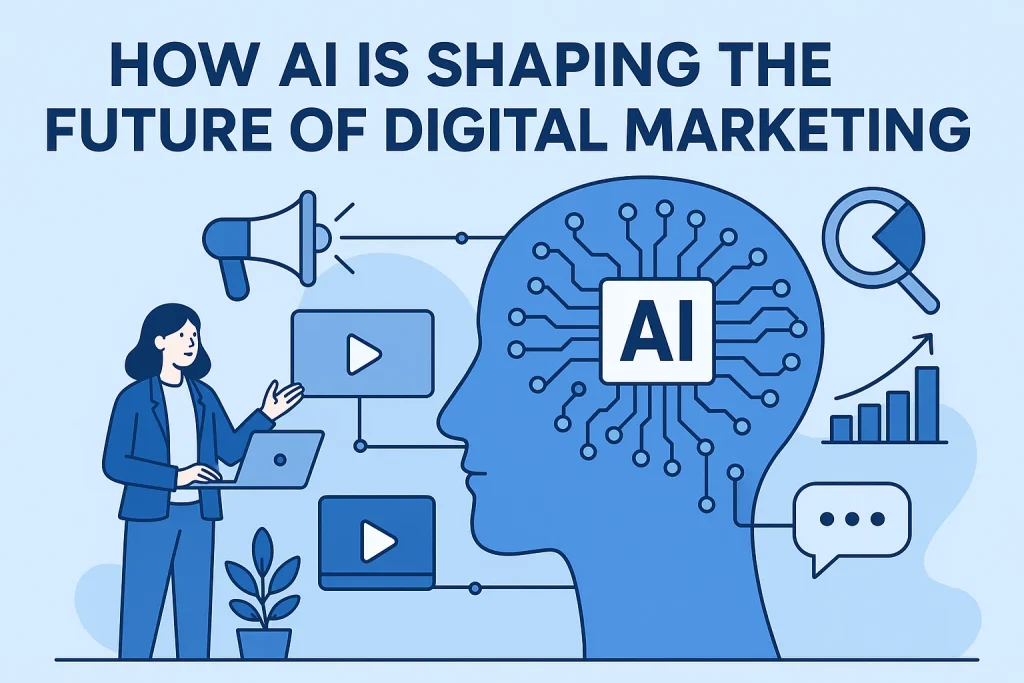
Artificial Intelligence (AI) is no longer just a buzzword—it’s a transformative force that is revolutionizing industries across the globe, particularly in digital marketing. As technology continues to evolve, AI is becoming an integral tool for businesses aiming to stay ahead of the competition, improve customer experiences, and drive business growth. In this blog, we’ll explore how AI is shaping the future of digital marketing and why businesses need to embrace it to stay competitive in 2025 and beyond. What is AI in Digital Marketing? AI in digital marketing refers to the use of intelligent algorithms and machine learning models to analyze data, automate tasks, optimize campaigns, and provide personalized experiences to consumers. From predictive analytics to AI-powered chatbots, AI is enhancing every aspect of digital marketing, allowing businesses to create smarter, more efficient campaigns. In 2025, AI is expected to be at the forefront of digital marketing strategies, making it easier for businesses to meet consumer demands and improve ROI. Here’s how AI is making a significant impact on the industry. 1. Personalized Customer Experiences at Scale One of the most exciting ways AI is transforming digital marketing is through personalization. Traditionally, businesses would segment their audience into broad categories and create one-size-fits-all campaigns. However, AI allows marketers to personalize content and experiences on an individual level, at scale. Impact: Personalized marketing not only enhances the customer experience but also drives higher engagement and conversion rates. By delivering the right message at the right time, businesses can boost customer satisfaction and brand loyalty. 2. AI-Powered Chatbots for Real-Time Customer Engagement AI-driven chatbots are becoming a staple in customer engagement strategies. These intelligent systems can simulate conversations with users in real-time, providing instant support, answering frequently asked questions, and guiding users through the sales funnel. Impact: Chatbots enhance the customer experience by providing quick, accurate, and personalized interactions. This not only reduces response times but also improves conversion rates by guiding potential customers to the information they need. 3. Predictive Analytics for Smarter Decision-Making AI’s ability to process vast amounts of data quickly and accurately has made predictive analytics an essential tool for digital marketers. By analyzing historical data, AI can predict future consumer behavior, enabling businesses to make more informed decisions about marketing strategies. Impact: Predictive analytics empowers businesses to optimize their marketing campaigns by focusing on the most profitable customers, improving ROI, and enhancing customer retention strategies. 4. AI-Driven Content Creation Content creation is one of the most time-consuming tasks in digital marketing. With the rise of AI, marketers now have access to tools that can help automate and streamline content creation. AI is capable of generating written content, images, videos, and even social media posts. Impact: AI-driven content creation not only speeds up the content production process but also allows for more dynamic and tailored content that resonates with the audience, increasing engagement. 5. Automated Campaign Optimization AI has the ability to automate and optimize digital marketing campaigns in real-time. Traditional marketing strategies involved constant manual adjustments and A/B testing to find the most effective approaches. With AI, marketers can automate these tasks and ensure that campaigns are continually optimized. Impact: Automated optimization reduces the time and effort marketers need to spend adjusting campaigns manually, leading to higher efficiency, lower costs, and improved campaign performance. 6. Voice Search and AI-Driven SEO As voice search continues to grow, AI is playing a crucial role in shaping SEO strategies. Voice search queries are often longer and more conversational than traditional text-based queries, making it essential for businesses to adapt their SEO strategies. Impact: AI-powered SEO tools make it easier for businesses to optimize their websites for voice search, improving their chances of ranking higher and getting discovered by voice search users. 7. Social Media Listening and Sentiment Analysis AI is revolutionizing social media marketing by enabling businesses to understand consumer sentiment and track brand mentions across social media platforms. Through social listening, AI can help businesses monitor conversations about their brand, competitors, and industry. Impact: Social media listening powered by AI helps businesses respond to customer concerns, capitalize on trends, and maintain a positive brand image, enhancing customer engagement and loyalty. Conclusion AI is no longer a futuristic technology—it’s already here, and it’s revolutionizing the way businesses engage with their customers. From personalized experiences and automated campaigns to predictive analytics and voice search optimization, AI offers powerful tools to improve digital marketing strategies and drive business growth. At Speed Dot 360, we’re at the forefront of integrating AI into digital marketing strategies to help businesses maximize their potential. By harnessing the power of AI, businesses can create more efficient, personalized, and impactful marketing campaigns that deliver real results. If you’re ready to embrace the future of digital marketing with AI, get in touch with us today to learn how we can help optimize your marketing efforts and grow your business. Frequently Asked Questions Q1: How can AI improve my digital marketing strategy?AI can improve your digital marketing strategy by automating tasks, personalizing customer experiences, optimizing campaigns in real-time, and providing valuable insights into customer behavior. Q2: What is the role of AI in SEO?AI plays a key role in SEO by improving search engine algorithms, optimizing content for voice search, and using predictive analytics to adjust SEO strategies based on performance. Q3: Can AI create content for my marketing campaigns?Yes, AI can generate content, from blog posts to product descriptions and social media captions, by analyzing data and producing relevant content based on defined parameters. Q4: Is AI suitable for small businesses?Absolutely! AI-driven marketing tools can be a game-changer for small businesses by automating tasks, optimizing campaigns, and providing personalized customer experiences, all of which help boost efficiency and growth. Q5: How does AI impact customer engagement?AI enhances customer engagement by personalizing experiences, automating responses, and providing real-time interactions through chatbots and predictive analytics. This leads to improved customer satisfaction and loyalty.
The Role of AI in Digital Marketing: Revolutionizing Customer Engagement
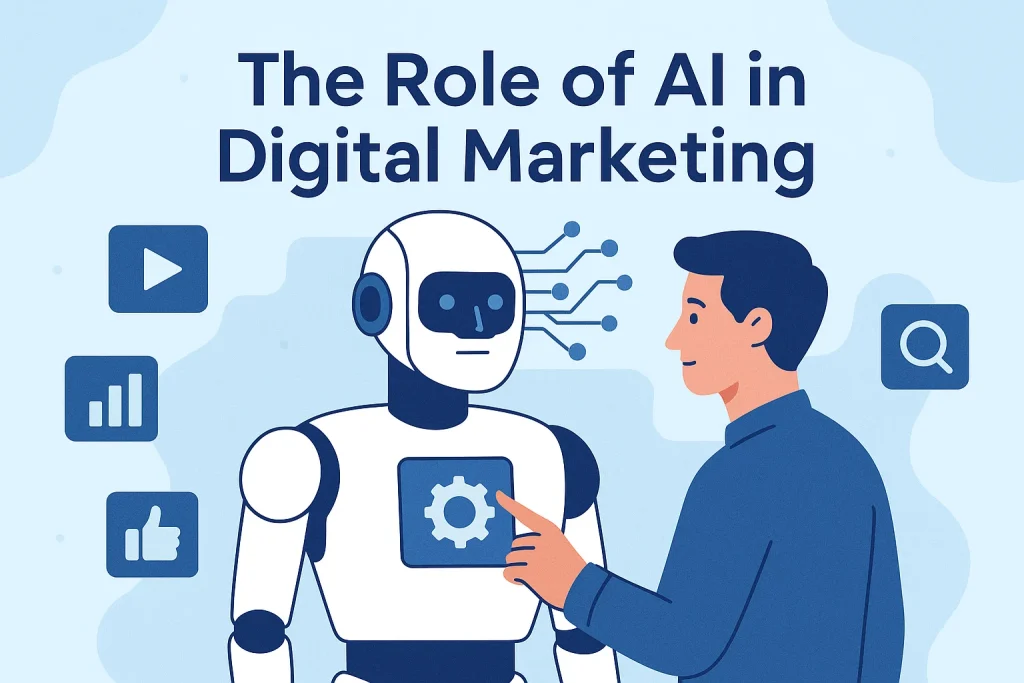
In the fast-paced world of digital marketing, staying ahead of trends and leveraging cutting-edge technologies is crucial for success. One of the most transformative technologies to impact the marketing landscape is Artificial Intelligence (AI). From predictive analytics to personalized content, AI is reshaping how businesses interact with their customers. In this blog, we’ll explore how AI in Digital Marketing is revolutionizing customer engagement and why it’s a game-changer for marketers in 2025 and beyond. What is AI in Digital Marketing? Artificial Intelligence (AI) in digital marketing refers to the use of machine learning algorithms, predictive analytics, natural language processing, and other AI technologies to optimize marketing efforts. AI helps businesses automate processes, improve decision-making, and provide personalized customer experiences. In a digital marketing context, AI assists in customer engagement by providing actionable insights, automating tasks, and creating highly tailored content and experiences. 1. Personalization at Scale Personalization has always been a key element of effective marketing. However, creating tailored experiences for each customer manually can be time-consuming and resource-intensive. This is where AI steps in. AI algorithms analyze vast amounts of customer data, such as browsing history, past purchases, and engagement behavior, to deliver hyper-personalized content and product recommendations. Impact: This level of personalization improves customer satisfaction, drives conversions, and builds stronger customer loyalty. By offering relevant products and services, AI helps businesses engage customers more effectively. 2. Chatbots and Conversational Marketing AI-powered chatbots are changing the way businesses interact with their customers. These AI-driven assistants can engage in real-time conversations, answer questions, guide customers through the sales funnel, and even handle customer support tasks. Impact: AI chatbots improve customer engagement by providing immediate, efficient responses to customer inquiries. This leads to increased customer satisfaction, reduced bounce rates, and higher conversion rates. 3. Predictive Analytics for Smarter Engagement AI-powered predictive analytics helps businesses anticipate customer behavior and tailor their marketing strategies accordingly. By analyzing historical data and customer behavior, AI can forecast what actions a customer is likely to take next—whether it’s making a purchase, abandoning a cart, or engaging with content. Impact: Predictive analytics allows businesses to be proactive in their customer engagement strategies. By anticipating customer needs and behaviors, businesses can tailor their outreach and provide timely, relevant content. 4. Dynamic Content Creation and Optimization Creating relevant, high-quality content is crucial for engaging customers. AI is revolutionizing content creation by helping marketers produce optimized, personalized content that resonates with their audience. AI tools can generate text, images, and even videos based on customer preferences and trends. Impact: AI-powered content creation and optimization ensure that businesses are delivering the right message at the right time. By automating content generation and fine-tuning it based on data, AI improves customer engagement and boosts content performance. 5. AI in Social Media Marketing Social media platforms are a goldmine for customer engagement, but managing social media marketing manually can be overwhelming. AI can help businesses optimize their social media marketing efforts by analyzing trends, monitoring brand sentiment, and automating posts. Impact: AI enhances social media marketing by providing deeper insights into customer sentiment, optimizing content delivery, and automating tedious tasks. This results in better engagement, higher brand awareness, and more effective social campaigns. 6. Enhanced Customer Insights through Data AI’s ability to analyze large volumes of data is one of its most powerful applications in digital marketing. With AI, businesses can gain deeper insights into customer behavior, preferences, and buying patterns. This data can be used to refine marketing strategies and improve customer engagement efforts. Impact: By gaining a better understanding of their customers, businesses can craft more relevant and engaging marketing campaigns, ultimately leading to better customer engagement and higher conversion rates. 7. AI for Email Marketing Optimization Email marketing remains one of the most effective channels for customer engagement, and AI is taking it to the next level. AI can optimize every aspect of email marketing, from segmentation and content creation to delivery timing. Impact: AI-powered email marketing ensures that businesses can send highly personalized and timely emails that resonate with customers, leading to improved engagement, higher click-through rates, and increased conversions. Conclusion: AI is the Future of Customer Engagement in Digital Marketing Artificial Intelligence is no longer just a buzzword—it’s transforming the way businesses engage with customers. From personalized content and product recommendations to predictive analytics and AI-driven chatbots, AI is revolutionizing how businesses create meaningful connections with their customers. As AI continues to evolve, digital marketers will have more tools at their disposal to create highly tailored, data-driven strategies that enhance customer engagement and drive growth. At Speed Dot 360, we specialize in harnessing the power of AI to improve digital marketing strategies, automate processes, and deliver exceptional customer experiences. By integrating AI into your digital marketing efforts, you can stay ahead of the competition and build lasting relationships with your customers. FAQS Q1: How does AI personalize customer engagement?AI personalizes customer engagement by analyzing data such as browsing behavior, purchase history, and demographics to deliver tailored content, recommendations, and offers. Q2: What is predictive analytics, and how does it help digital marketing?Predictive analytics uses AI to analyze customer data and predict future behaviors, such as when a customer is likely to make a purchase. This helps businesses target customers with relevant content and offers at the right time. Q3: How can AI improve social media marketing?AI improves social media marketing by automating tasks like post scheduling, monitoring brand sentiment, analyzing trends, and targeting the right audience with optimized content. Q4: What role does AI play in email marketing?AI optimizes email marketing by personalizing campaigns, determining the best send times, and conducting A/B testing to improve open rates, click-through rates, and conversions. Q5: Can AI really replace human marketers?While AI can automate many tasks and enhance customer engagement, human marketers are still essential for strategic decision-making, creativity, and emotional intelligence in marketing campaigns.
AI in Marketing: How It Can Revolutionize Your Marketing Efforts

In recent years, artificial intelligence (AI) has rapidly advanced, and it’s no surprise that it’s now making a massive impact in the marketing world. AI’s ability to analyze vast amounts of data, automate repetitive tasks, and provide insights that were previously unattainable is transforming the way businesses approach marketing. From improving customer targeting to enhancing personalization and boosting efficiency, AI is revolutionizing marketing efforts across industries. In this blog, we’ll explore how AI is reshaping marketing and why integrating it into your strategy can give you a competitive edge. What is AI in Marketing? AI in marketing refers to the use of artificial intelligence technologies and algorithms to improve and automate marketing processes. It involves leveraging machine learning, predictive analytics, natural language processing, and other AI tools to enhance decision-making, optimize campaigns, and provide personalized experiences to customers. AI is not just for tech giants anymore—businesses of all sizes are beginning to harness its power to drive marketing success. The Benefits of AI in Marketing 1. Enhanced Customer Targeting and Segmentation One of the most significant ways AI is changing marketing is through improved customer targeting. AI algorithms can analyze vast amounts of customer data, including purchase history, browsing behavior, and demographic information. By processing this data, AI can segment customers into specific groups, allowing businesses to target the right audience with the right message at the right time. 2. Personalization at Scale Personalized marketing has been a buzzword for years, but AI takes it to a whole new level. AI-powered tools can deliver hyper-personalized content, product recommendations, and messaging based on individual customer preferences. Whether it’s through email campaigns, social media ads, or website content, AI allows businesses to create tailored experiences for each customer, driving engagement and improving conversion rates. 3. Predictive Analytics for Better Decision-Making AI-powered predictive analytics allows businesses to forecast future customer behavior and trends. By analyzing historical data, AI can predict what customers are likely to do next—whether it’s making a purchase, abandoning their cart, or engaging with content. These insights help marketers make data-driven decisions, allocate resources more effectively, and improve the overall marketing strategy. 4. Improved Customer Experience with Chatbots and Virtual Assistants AI-driven chatbots and virtual assistants are becoming increasingly popular for enhancing customer service. These tools use natural language processing to understand and respond to customer inquiries in real time. By providing instant responses to common questions, chatbots improve the customer experience while freeing up human agents to handle more complex issues. 5. Automation of Repetitive Tasks AI can automate various time-consuming marketing tasks, such as data entry, content creation, social media scheduling, and customer segmentation. By automating these tasks, businesses can save time and resources, allowing marketing teams to focus on more strategic and creative efforts. AI-powered automation tools can also optimize marketing campaigns in real-time, making adjustments based on performance data. 6. Better Insights and Reporting AI’s ability to analyze vast amounts of data quickly enables marketers to gain better insights into campaign performance. From tracking user engagement to measuring ROI, AI-powered analytics tools provide real-time reporting and insights that allow businesses to fine-tune their marketing efforts for better results. By having access to these insights, companies can optimize their strategies and achieve more impactful results. 7. Cost Efficiency While AI may require an upfront investment, it can save businesses significant costs in the long run. By automating repetitive tasks, optimizing campaigns, and improving targeting, AI helps businesses achieve better results without increasing their marketing budget. Moreover, AI reduces the risk of human error and ensures marketing efforts are more effective, leading to better ROI. How AI Can Enhance Your Marketing Strategy 1. AI-Driven Content Creation AI can assist in content creation by generating blog posts, social media updates, product descriptions, and more. Tools like natural language generation (NLG) use AI to create written content that is engaging and relevant to the target audience. While AI content tools aren’t replacing human writers, they can help marketers generate ideas, optimize content for SEO, and streamline content production processes. 2. AI-Powered Email Campaigns AI can optimize email marketing campaigns by analyzing user behavior and predicting the best times to send emails. AI tools can also personalize email content based on recipient preferences and past interactions. For instance, an e-commerce website might send personalized product recommendations to customers based on their previous purchases, enhancing the customer experience and increasing sales. 3. Social Media Marketing and AI Social media marketing is another area where AI shines. AI tools can analyze social media engagement data to identify trends, monitor brand sentiment, and track customer feedback. AI can also automate social media posting, ensuring that content is published at optimal times. Additionally, AI can help identify influencers and brand advocates who can amplify your marketing efforts. 4. Dynamic Pricing Models AI can enable dynamic pricing models that adjust the price of products or services based on real-time data. For instance, AI can analyze competitor prices, customer demand, and market conditions to recommend the optimal price for your products. This dynamic approach ensures your business stays competitive and maximizes revenue. 5. Voice Search Optimization With the rise of voice-activated devices like smartphones and smart speakers, voice search optimization is becoming essential for businesses. AI-powered voice recognition technologies are helping marketers optimize their content for voice search queries. By understanding natural language and context, AI ensures that businesses’ content ranks well in voice search results. How AI Can Boost Marketing ROI AI’s ability to improve targeting, optimize campaigns, and automate repetitive tasks translates into better marketing ROI. By leveraging AI, businesses can: With AI, marketers can achieve a higher return on their marketing investments and maximize the impact of their campaigns. Conclusion AI is no longer just a futuristic concept—it’s already revolutionizing the way businesses approach marketing. By leveraging AI’s capabilities, businesses can improve targeting, create personalized experiences, automate tasks, and make data-driven decisions that boost marketing performance. The integration of AI into your marketing strategy is not just an advantage; it’s quickly becoming a
The Right Use Of AI In Digital Marketing
Artificial Intelligence (AI) came into our lives with a revolutionary change, commenced in a simple world, and has now set a trend that is no longer a futuristic concept; AI has changed how we do our work and has essentially transformed the digital marketing landscape as well. Brands use AI for content generation, SEO, PPC advertising management, and customer engagement. However, as AI becomes more embedded in marketing, ethical concerns arise about transparency, privacy, and authenticity. For businesses that rely on SEO optimization services, AI-driven automation can streamline processes, but over-reliance on AI-generated content and unethical data use can damage credibility. This article explores the ethical and strategic use of AI in digital marketing, ensuring that brands can harness its potential without compromising integrity. The Fine Line Between Innovation and Manipulation AI is evolving how businesses interact with consumers, but where should the line be drawn? The ethical use of AI means ensuring that algorithms enhance rather than manipulate user experiences. Marketers must ensure AI tools are used transparently and fairly, avoiding deceptive practices that could mislead customers or exploit their data. AI-driven marketing should prioritize user trust, ensuring that automation enhances experiences rather than replaces genuine human interaction. Ethical AI respects user autonomy, avoids manipulative tactics, and provides value-driven engagement rather than focusing solely on conversions. Key Ethical Considerations: Transparency in AI-driven decision-making Avoiding AI-generated misinformation Preventing AI Bias in advertising and content delivery Balancing Automation with Authenticity AI tools like ChatGPT and Jasper can assist in content creation, but blindly using AI-generated content can lead to plagiarism, misinformation, and generic output. Content marketing agencies should balance AI efficiency with human oversight to ensure that content remains original, engaging, and contextually accurate. AI can be leveraged to generate first drafts, analyze trends, and optimize readability, but final content should always be reviewed by human editors. While AI can speed up production, ethical concerns arise when AI content is misrepresented as human-written or used to create misleading narratives. Best Practices for Ethical AI Content Creation: Ensure AI-generated content is reviewed and edited by humans Avoid misleading AI-generated narratives Disclose AI involvement in content production Use AI to assist, not replace, creative content teams Enhancing Search Without Gaming the System SEO has evolved with AI, making keyword research services more efficient. AI tools analyze user intent and suggest optimized keywords, but some businesses misuse AI to manipulate rankings with keyword stuffing or AI-generated spam content. Ethical AI in SEO ensures that search results remain valuable to users. AI should be used for data-driven insights, improving search intent alignment, and refining content strategies rather than exploiting algorithm loopholes. Ethical SEO Practices with AI: Use AI-driven keyword insights responsibly Avoid auto-generated articles with no human review Prioritize high-quality, informative content Leverage AI for intent-based content optimization Transparency and Fair Bidding Practices PPC advertising management relies heavily on AI for real-time bidding and ad targeting. While AI optimizes campaigns, there is a risk of manipulative practices such as inflated ad engagement or non-transparent targeting. Using AI in PPC should focus on creating a fair and efficient bidding system that maximizes ROI while respecting ethical standards. Marketers should ensure that AI-powered ad placements provide genuine value and do not mislead audiences with overly optimized messaging. Ensuring Ethical AI Use in PPC: Clearly disclose AI-driven ad placements Avoid misleading AI-generated ad copies Respect user privacy when targeting ads Ensure fair bidding practices to prevent price manipulation Ethical Outreach vs. Automation Abuse AI can streamline link-building services by identifying high-quality backlink opportunities, but mass AI-generated outreach often results in spammy, irrelevant links that hurt credibility. Marketers should ensure that AI is used to build meaningful partnerships rather than automate outreach without context. Ethical link-building should prioritize genuine connections and high-authority sources rather than excessive automation. Ethical Link Building with AI: Use AI for research, not for mass automation Personalize outreach efforts with human input Avoid black-hat AI tactics like fake link networks Give strict attention to quality over quantity when building backlinks Personalization Without Privacy Invasion AI-driven chatbots enhance customer interactions, but they must not deceive users into thinking they are interacting with humans. Transparency is key, and brands should avoid using AI-generated conversations to manipulate or mislead customers. AI chatbots should enhance user experience through relevant, quick responses while allowing seamless human escalation when necessary. Brands should also prioritize ethical data collection, ensuring chatbots do not store unnecessary user information. Best Practices for Ethical AI Chatbots: Clearly indicate chatbot interactions Use AI for assistance, not manipulation Ensure chatbots respect customer privacy Allow human intervention when necessary Ensuring Compliance in Digital Marketing AI-driven analytics provide valuable insights, but ethical concerns arise when AI is used to track user behavior without consent. Organizations must comply with data protection rules like GDPR and CCPA. In addition, transparency in data collection and AI usage is essential to maintaining consumer trust. Businesses should prioritize security, anonymization, and explicit consent when handling user data. Key Privacy Considerations: Obtain explicit user consent before collecting data Anonymize data when possible Be transparent about AI’s role in data analysis Implement data protection measures to prevent breaches Ethical Influencer Targeting & Engagement AI helps brands identify influencers and analyze engagement, but some brands misuse AI-generated engagement, such as fake followers and auto-generated comments. The ethical use of AI in social media marketing ensures genuine audience interactions and prevents misleading metrics. AI should be used to enhance engagement strategies rather than fabricate false audience growth. How to Use AI Ethically in Social Media: Avoid AI-generated fake engagement Disclose AI-driven influencer partnerships Use AI insights for authentic audience engagement Ensure AI does not manipulate social sentiment How to Use AI Without Losing Credibility? Consumers value authenticity, and over-reliance on AI can erode trust. Ethical AI practices ensure that brands maintain credibility and foster long-term relationships with their audience. Brands should be upfront about AI’s role in their marketing strategies and avoid using AI to manipulate user behavior or perceptions. Building Consumer Trust with AI: Use AI as